Author: Arden O’Keefe

  • BLOG TOUR: Thorns of Chaos by Jeremiah Cain

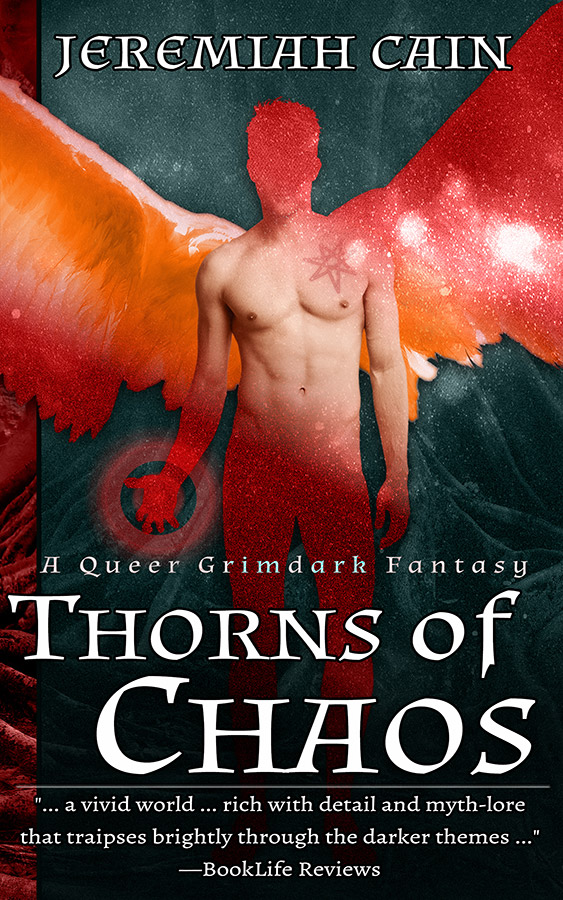
    Thorns of Chaos - Jeremiah Cain

    Jeremiah Cain has a new MM fantasy romance out: Thorns of Chaos. And there’s a giveaway.

    “Cain crafts a vivid world … rich with detail and myth-lore that traipses brightly through the darker themes of oppression and suffering.” –BookLife Reviews

    Queer Grimdark Fantasy: Finn is no hero, chosen born, or noble. Despite escalating tensions from the Dayigan soldier’s occupation of Feah lands, the happy-go-lucky twenty-five-year-old is content to spend his days fishing and flirting with the other men in his Celtic-like village. But everything changes at their midyear’s eve festival when an angry Dayigan commander catches Finn in the arms of another man. Suddenly framed for murder, he must flee his village or face death.

    However, Finn isn’t the Dayigans’ only target. They believe all Feahs are wicked and intend to destroy them by any means necessary. The Feahs’ one hope of stopping the reign of terror is to find a relic forged by dark faeries and able to control chaos magic-and claim it to protect themselves. With the fate of the Feah lands resting on his shoulders, Finn seeks out sorcerers who practice ancient, forbidden magic.

    Instead, he finds love with the handsome but fierce head of the sorcerers–and a power he never knew he could possess.

    But when the Dayigans strike, can Finn harness the perilous magic to save his people without losing himself in the process?

    Warnings: violence, sexual content, harsh language, homophobia, major character death

    Universal Buy Link


    Giveaway

    Jeremiah is giving away a $20 Amazon gift card with this tour:

    a Rafflecopter giveaway

    Direct Link: http://www.rafflecopter.com/rafl/display/b60e8d47278/?


    Excerpt
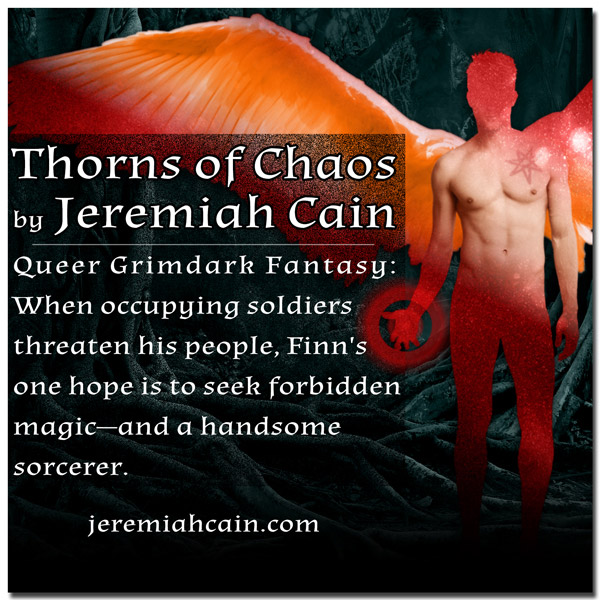
    Thorns of Chaos meme
    Finn jumped up from the shore and spread his wings before pushing them down to gain lift.

    He kept a low flight of about thirty feet and could see their village as he passed.

    A dozen rowboats—wicker frames covered in skins—lay inverted in a line on the shore. Just past where sand turned to grass, but before turning to forest, a small cluster of homes stood within a fence of long, thin branches woven horizontally between rough posts. Each of the houses had low mud walls and tall conical roofs of thatch.

    Finn saw that all the villagers had gathered outside around the houses. Many held torches. A few children chased each other just above the roofs in aerial frolics.

    Down the shoreline, Finn continued flying toward the Dayigan fort.

    Ominous walls of thick logs, standing two stories high and sharpened, surrounded the roughly square fortress at a hundred and fifty feet across.

    When the Dayigans had first arrived four years ago and built their walls, Finn’s people were aghast that they would rip down so much of their forest for such a pointless thing. The structures inside the walls were wooden too, with roofs shingled with green-painted wood. Wooden docks extended from the fort out into the river. Three large sailing ships—not built from these forests but from some forest somewhere—rocked within the tide.

    At each corner of the fort, a tower extended higher, and from the center of each, a mast held a smaller horizontal pole at its peak. From each, an emerald green banner hung like a warning in the wind. In gold thread, it bore the sun and both moons in an upward-pointing triangle. A downward-pointing triangle, below the first, represented the distant island city of Dayigo. It screamed, “This is ours now, not yours,” a sentiment echoed by the fort’s inhabitants.

    Finn knew better than to enter the fort. Instead, he landed on the shore just outside the wall.

    There, the ground was planked over in a level boardwalk. Stalls ran along the edges. The area should have been bursting with goods from all across the continent, but it was empty.

    Holding his salmon like a smelly newborn, Finn stared, disappointed and unsure what to do.

    Lann landed beside him. “Won’t get much trading done here.”

    “’Tis market day, is it not?”

    “Aye, it were market day when it were day,” Lann said. “But ’tis not day no more. Come on then, let’s go back. Chief Kaie will have enough gifts without yours, so.”

    “I’ve come this far, though, haven’t I,” Finn said. “Might as well see if someone’s about.”

    Finn walked forward and stepped up on the boardwalk. He stopped and gasped, clutching his fish to his chest.

    A Dayigan soldier stood guard. He was Human—a race like the Terovae, but without wings. They had hairy faces, and though some were thin, like Terovaes, others could grow wider with either muscle or fat. This soldier was larger in the muscular variety, and a suit of chainmail, covered by a green tabard, armored him.

    The soldier eyed Finn but didn’t turn his way.

    Finn had also found Humans to be a little angry all the time.

    “Go on then,” Lann prompted behind Finn. “’Twill be midnight ’fore you’re done.”

    Finn breathed deeply and approached.

    “Good evening to you, Dayigan friend,” Finn said. “Hate to be a bother, sir, but I’ve come for a quick trade, and I’ll pop off.”

    Maintaining his rigid posture and staring forward, the Human replied gruffly. “The market’s shut for the month.”

    “Aye, that be true,” Finn said. “And I hate I missed it, but ’tis a special night, this. Tonight, my people—the Feah, well, all the Five Tribes really—celebrate Midyear’s Eve. That’s the end of the dark season and the start of the light season. I’m sure your God Déagar would have a special place in his heart for that, right? Light season, like. And you see, there’s this tradition where we all get a gift for the chief druidess, and I, fool I am, forgot. And to make things worse, me brother’s a temple guardian and his wife—my sister by marriage—she’s not only a druidess, herself, but no less the second-in-command of our whole fecking tribe.” He breathed. “So, ’twill go well noticed if I show up with naught but empty hands and shrugged shoulders, won’t it now?”

    The soldier said nothing.

    “Right,” Finn said. “What can I get for this then?” He held up the salmon. “A basket of eggs would be lovely. The druidesses use them for the beernog.”

    “There’s plenty of fish in the river. We can get our own.”

    “That be true, yes. But this fish isn’t in the river, is it? No, this fish is ready and waiting for yourself. And that saves you all the bother of fishing it out.”

    The Human turned his head toward Finn and glared a moment. He snatched the fish by its tail. He held it, looked at it, and threw it.

    The salmon flew a limp and uneventful flight to hit the boardwalk’s edge, head slapping wood with a spray of blood. It fell to splat on the beach at the water’s edge.

    The Human chuckled. “Looks like ’tis in the river to me.”

    “Fucking Human!” Lann charged forward to fight.

    The soldier drew his sword. “You want to fight me, savage? I’ll gut the both of you before you can—”

    “No call for that,” Finn said. “We’re all friends having a chat like.”

    Lann stopped but glared.

    Finn walked to Lann and patted his chest, now flexed along with the rest of his tense body.

    “I don’t think he wants to trade at all,” Finn said. Turning back to the soldier, he added, “We’ll be on our way then. Good night to you.”

    The soldier didn’t lower his sword, and Lann didn’t relax.

    “The village’ll be waiting for us now,” Finn insisted.

    Lann spit on the plank-covered ground.

    Finn pushed Lann’s shoulder to turn him.

    The Terovaes flew away.


    Author Bio
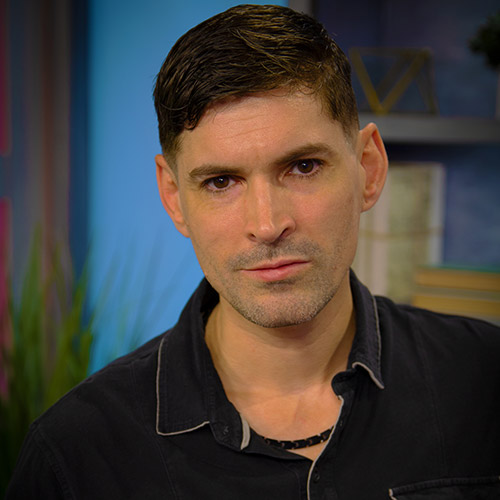
    Jeremiah Chain

    Jeremiah Cain is a dark epic fantasy writer of a vivid world that BookLife Reviews called, “rich with detail and myth-lore that traipses brightly through the darker themes.” He served as an army medic and has a BA in Communication with a minor in English. In addition to reading and writing, he loves video games, particularly RPGs.

    Author Website: https://jeremiahcain.com

    Author Facebook (Author Page): https://www.facebook.com/jeremiahcain.novelist/

    Author Goodreads: https://www.goodreads.com/author/show/3117212.Jeremiah_Cain

    Author Amazon: https://www.amazon.com/stores/Jeremiah-Cain/author/B002QH4H2C

    Other Worlds Ink logo

  • BLOG TOUR: “Last Worst Hopes“ by Lee Hunt

    Last Worst Hopes - Lee Hunt

    Lee Hunt has a new epic fantasy out in both eBook/print and audiobook formats, set in the world of the Dynamicist Trilogy: Last Worst Hopes. And there’s a giveaway!

    Their world was ending, all the heroes were dead, the leaders confused, and their enemies were head and shoulders above them. But there was no one else; they were the dregs, the last worst hopes.

    Nehring Ardgour has summoned Skoll and Hati from hell. They have torn through the proud and ancient country of Engevelen and the angelic Methueyn Knights that protect it. Armies have died, cities have fallen. None of the great remain. No brilliant inventors, no powerful knights, no master wizards.

    No heroes.

    But it gets worse. Farrah Harbinger has looked into the future and foretells the coming of an enemy worse than all the others, a creature of destruction and entropy like no other. A being who will grind all hopes and memory of civilization into dust: the One, True Devil.

    Who can stop it? Who is left to even try?

    Surely not Val, an arrogant young wizard who no one takes seriously, or Mick, an old man who can’t even remember his name. Certainly not Dav, who cannot seem to tell left from right or up from down, or Aveline, a squire filled with more questions than courage. No one would pick them to save the world, and yet there is no one else left.

    Universal Buy Link | Get it On Amazon


    GUEST POST: Magic in Last Worst Hope

    Your new novel, Last Worst Hope (LWH) is set in the world of the Dynamicist Trilogy, correct?

    Yes it is. LWH is set about 250 years prior to the events of Dynamicist, during the last weeks of what is later known as the Methueyn War.

    But there are no dynamicists in this era, are there?

    None. In those days, magic wielding individuals called themselves wizards. Gerveault’s famous advice about wizards goes unheeded in LWH:

    “In today’s world a wizard is a risk-taker, a reckless gambler. A wizard, as rare as the talent for wizardry may be, is widely mistrusted. This is not because the ability to change things makes one morally untrustworthy, but because what wizards do is inherently unpredictable. Wizards are a thing of the old world, and this school is not about ideas that no longer work. A wizard, with only a very few exceptions, is also likely to live a very short life. We want to help you become something else.”

    What do wizards in the time of LWH say?

    For the most part they live up to Gerveault’s description. Val leads a group of them, called Elysians, and she finds them very difficult to manage:

    “Is everyone ready?” Val asked in as loud a voice as she possessed. She looked directly at Rebecca and added, “Remember, Courant is the pride of Engevelen. Be careful. As of an hour ago, people still lived there.”

    Rebecca smirked and said, “Don’t worry, Val, this is what Wizards do!”

    “What wizards do!” shouted Christopher, making his dolls clap their eerie, human-like hands together, one doll to the other.

    “Indeed,” drawled Samantha Westerberg. “What we all do. When do we begin?”

    Wizards in LWH prefer to ‘do’ over thinking or talking.

    Why are the styles of magic so different in the same world at two different times?

    The answers to this are never spelled out in LWH, but there are several reasons. The most important of these is that the ‘cost’ of magic is lower than in the time of Dynamicist. The machine that Ardgour makes—and comes into effect at the end of LWH—increases a kind of cost modulus, called Huygens. This has the effect of making wizardry more dangerous and greatly reduces the power of Skoll and Hati.

    What do you mean by the ‘cost’ of magic?

    Whether the wizards of the time pay attention or not, magic in the world of Dynamicist obeys the laws of thermodynamics. There are costs and losses. So, when a wizard tries to change something, a little energy is lost in the process. The wizard’s body will cool. And the law of conservation of energy is still obeyed, whether the wizard believes that or not.

    How do you mean that ‘energy is conserved’?

    The wizards don’t create energy. They borrow it. Chris invests energy in his creepy dolls in the making of them. The area of effect when he breaks the dolls moves energy around, too. He transfers heat—creating a hotter area and, by a collateral effect—cools another area elsewhere.

    Interesting. I noticed that Halwyn uses physical gestures—he pushes the mountain, Rebecca makes rhymes, and Val uses analogies. So, why do the various wizards all perform their acts of magic so differently?

    The cost, or Huygens modulus, is low at their time, so unbeknownst to them, there is little need for efficiency on the part of the wizards. Most of them have just come up with some instinctive process to make things happen. And they practice and practice with this process until it becomes second nature to them.

    But Val is different.

    Yes. She belongs to a school of thought called the “Acutists” who believe that (a) Huygens exists, (b) that its existence matters, and (c) that there must be a self-consistent set of rules behind the operation of magic.

    How come the other wizards don’t agree?

    Because what they have done has worked for them up until now. And not thinking about it helps them to perform better so long as nothing changes. These wizards belong to a school who Val calls, “Staticians” because things staying the same—staying static—is helpful to them.

    How does Val’s approach to wizardry differ from dynamics?

    Val is using analogic reasoning to figure out how much energy to transfer. She ‘feels’ the analogy of it. This is halfway between the instinctive methods of her fellow wizards and the mathematical approach of dynamics. Here is an example of Val’s thought process in figuring out how to heat a bucket of water versus something as large as a man or a horse:

    A stein is to a bucket, what a bucket is to an armored man, the same as an armored man to a horse. Like is to like is to like, and thus we go from what we know to what we thought we didn’t know.

    Or here, more chillingly, where Val is trying to determine the minimum amount of temperature change required to coagulate a skolve’s blood:

    Like eggs in a pan, like flour in a gravy, like pudding stirred at heat, they all abruptly change from thin to thick. Their heart is like the stirring whip. Like is to like is to like, and thus we go from what we know to what we thought we didn’t now.

    So who’s approach is better: Staticians, Acutists, or dynamicists?

    It depends on what the situation is ‘like.;


    Giveaway

    Lee is giving away a $20 Amazon gift card with this tour:

    a Rafflecopter giveaway

    Direct Link: http://www.rafflecopter.com/rafl/display/b60e8d47235/?


    Excerpt

    They watched, hardly daring to breathe. Then, as if buffeted by a sudden wind, something stirred among the trees. An instant later, the movement resolved into soldiers, running, seven of them, bursting from the trees. It looked like someone in the group might have stumbled and been helped up by others.

    The horn called a single note, which cut off almost before fully forming.

    “Run!” shouted the major.

    “Run!” shouted Havard.

    The call echoed up and down the line, but to Mick it did not look like the soldiers were running fast at all. It almost never does, when you’re watching someone impatiently, and absolutely never does when they might die if they’re too slow. He wondered how he knew this.

    The image of Sir Valence playing fetch with Fenris blazed like the sun in Mick’s eyes.

    Last chances.

    Mick did not shout “Run!” but suddenly, unaccountably, he found himself over the line with a pike in his hands, running toward the struggling rangers. He did not remember grabbing the pike or leaping over the wall. He did not remember if landing from the six-foot height had hurt his ancient knees. Mick did not remember his earlier self-doubt, never worried if he would get to the rangers in time, never speculated that he might not be needed, or if his effort was a fool’s errand, the futile histrionics of a mad, old fool from a house of fools, never wondered if he might do more harm than good or fretted that a wall of monsters might come out of the trees and dwarf any effort a hundred of him could muster. He never considered in any way the question of leaping the wall or not. There was no thought or speech involved at all.

    He simply ran.

    “Mick, get back here!” bellowed Havard. “For knight’s sake, stop!”

    But Mick was gone.

    The ground sped by quickly as the rangers grew closer and closer. Two huge, strange shapes broke out of the trees, aiming straight for the soldiers. He tightened his grip on the pike, lowered his head, and charged.

    The rangers abruptly stopped and formed a semi-circle. One of them limped on as the rest rotated their spears and planted them, gleaming tips pointing up and back toward the trees. An instant later, the skolves hit them, hard, pushing recklessly into the rangers’ spears, swiping at them with their rusty swords. For a moment, the spears held them there, but could not turn them back. Mick could see the skolves shake from side to side, paws, swords and bodies trying to dislodge the spears from the rangers’ hands and get inside their arcuate line.

    As Mick rushed toward the battle, one of the spears broke. The rightmost skolve lunged forward with a roar and was immediately hit on its horse-length head by an overhand sword stroke delivered by one of the rangers. The creature reeled back and fell.

    Mick broke left for several long strides, then sharply right into the flank of the skolve still held at spear length. “Last chance!” he roared as he lunged and thrust his pike straight into the chest of the beast, taking it off its feet so suddenly that its sword flew out of its huge paw, tracing a spinning arc through the sky before disappearing into the grass. Ferociously, the old man twisted the bladed end of the pike, which had penetrated a foot-and-a-half into the creature’s chest cavity, and step-pulled it out. Dark red blood sloshed out of the ragged wound, but the beast was done. It could only collapse and curl weakly around itself.

    The other skolve was struggling under spear thrusts from four of the rangers. With an incomprehensible roar, Mick leaped forward and rammed his spear into the skolve’s head, just missing its eye. It skittered along skull until it caught at the base of where its cheekbone would be. Mick pushed harder, forcing the skolve’s head roughly to the earth, and the haft broke, making him stumble forward with seven feet of wood in his hands. He stepped between the rangers, shifted his grip, and speared the skolve again in the snout with the broken end of the pike haft. It tried to scramble up but collapsed, bleeding from dozens of wounds, but the soldiers kept slashing at it. No one was certain when it would be safe to stop stabbing. Another ranger was rolling around on the ground, hands to his leg, blood seeping between fingers.

    “Pick him up,” said one of the rangers at last, a man with a rough goatee.

    Mick shouldered his way in, whipped off his belt, slapped the man’s hands away from his leg, and wrapped it tight twice around, just above a large gash oozing red. “I’ll take him,” he wheezed, picking the soldier up and slinging him over his shoulder.

    “Run!” a female ranger screamed. “There’s more coming!” Her voice dropped. “All of them.”

    Mick did not bother looking back, knew that there was no looking back once over the wall once the chance was taken. There were, however, consequences.

    A vast, high-pitched wail passed overhead. A sheet of arrows. Mick knew the sound from somewhere in the distant past. A storm punctuated by the pounding of arrows as they struck their targets. Mick did not look back.

    “Look out!” cried the man he was carrying, and an instant later something heavy struck the back of Mick’s leg. He stumbled and went down. The soldier flopped off his shoulders with a scream. “Ahhh. Fuck me,” the man groaned. “Why?” he cried piteously as he rolled weakly, one arm over his face.

    Mick staggered back up, hopped, found that his legs still worked, saw nothing was sticking out of himself, shoveled the ranger back up into his arms, and started running again.

    “Grandpa,” the ranger whispered. “Grandpa … don’t drop me again.”


    Author Bio

    Lee Hunt

    Born with only one working lung and having had the last rights read to him and dying of an influenza related viral pneumonia, 25-year-old geophysicist Lee Hunt experienced several near-death dreams. The power of communication and the need to both understand and be understood was at the heart of each. He had already found that nothing was more important than being able to cross the distance between people.

    Lee’s interests are eclectic. He is an Ironman Triathlete, hiker, traveler, and an enthusiastic sport rock climber. Lee also continues to work as a geophysicist on Carbon Capture and Sequestration projects, and is a writer for BIG-Media.ca.

    The dream of understanding and being understood has never left his mind, and Lee continues that in his works of fiction through metaphor. His works include The Dynamicist Trilogy, Last Worst Hopes and Bed of Rose and Thorns.

    Author Website: https://www.leehunt.org/

    Author Facebook (Personal): https://www.facebook.com/profile.php?id=100052376555360

    Author Facebook (Author Page): https://www.facebook.com/DynamicistAuthor

    Author Goodreads: https://www.goodreads.com/author/show/1196106.Lee_Hunt

    Author Liminal Fiction (LimFic.com): DynamicistAuthor

    Author Amazon: https://www.amazon.com/Lee-Hunt/e/B082YFTMCK

    Other Worlds Ink logo

  • COVER REVEAL: Last Worst Hopes by Lee Hunt

    Last Worst Hopes - Lee Hunt
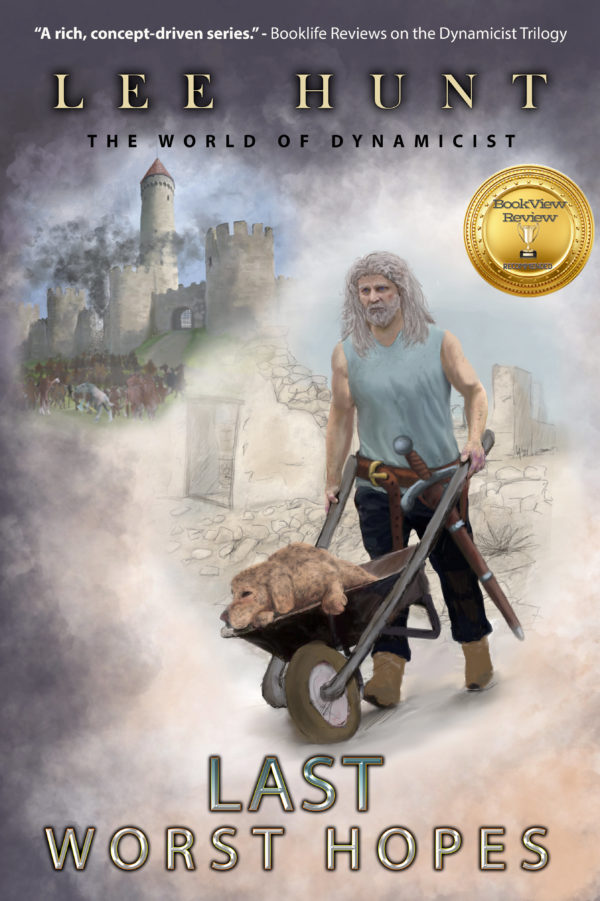
    Lee Hunt has a new epic fantasy coming out in both eBook/print and audiobook formats, set in the world of the Dynamicist Trilogy: Last Worst Hopes. And we have the cover reveal! There’s a giveaway too.

    Their world was ending, all the heroes were dead, the leaders confused, and their enemies were head and shoulders above them. But there was no one else; they were the dregs, the last worst hopes.

    Nehring Ardgour has summoned Skoll and Hati from hell. They have torn through the proud and ancient country of Engevelen and the angelic Methueyn Knights that protect it. Armies have died, cities have fallen. None of the great remain. No brilliant inventors, no powerful knights, no master wizards.

    No heroes.

    But it gets worse. Farrah Harbinger has looked into the future and foretells the coming of an enemy worse than all the others, a creature of destruction and entropy like no other. A being who will grind all hopes and memory of civilization into dust: the One, True Devil.

    Who can stop it? Who is left to even try?

    Surely not Val, an arrogant young wizard who no one takes seriously, or Mick, an old man who can’t even remember his name. Certainly not Dav, who cannot seem to tell left from right or up from down, or Aveline, a squire filled with more questions than courage. No one would pick them to save the world, and yet there is no one else left.

    Universal Buy Link | Get it On Amazon


    Giveaway

    Lee is giving away a $20 Amazon gift card with this tour:

    a Rafflecopter giveaway

    Direct Link: http://www.rafflecopter.com/rafl/display/b60e8d47233/?


    Excerpt

    They watched, hardly daring to breathe. Then, as if buffeted by a sudden wind, something stirred among the trees. An instant later, the movement resolved into soldiers, running, seven of them, bursting from the trees. It looked like someone in the group might have stumbled and been helped up by others.

    The horn called a single note, which cut off almost before fully forming.

    “Run!” shouted the major.

    “Run!” shouted Havard.

    The call echoed up and down the line, but to Mick it did not look like the soldiers were running fast at all. It almost never does, when you’re watching someone impatiently, and absolutely never does when they might die if they’re too slow. He wondered how he knew this.

    The image of Sir Valence playing fetch with Fenris blazed like the sun in Mick’s eyes.

    Last chances.

    Mick did not shout “Run!” but suddenly, unaccountably, he found himself over the line with a pike in his hands, running toward the struggling rangers. He did not remember grabbing the pike or leaping over the wall. He did not remember if landing from the six-foot height had hurt his ancient knees. Mick did not remember his earlier self-doubt, never worried if he would get to the rangers in time, never speculated that he might not be needed, or if his effort was a fool’s errand, the futile histrionics of a mad, old fool from a house of fools, never wondered if he might do more harm than good or fretted that a wall of monsters might come out of the trees and dwarf any effort a hundred of him could muster. He never considered in any way the question of leaping the wall or not. There was no thought or speech involved at all.

    He simply ran.

    “Mick, get back here!” bellowed Havard. “For knight’s sake, stop!”

    But Mick was gone.

    The ground sped by quickly as the rangers grew closer and closer. Two huge, strange shapes broke out of the trees, aiming straight for the soldiers. He tightened his grip on the pike, lowered his head, and charged.

    The rangers abruptly stopped and formed a semi-circle. One of them limped on as the rest rotated their spears and planted them, gleaming tips pointing up and back toward the trees. An instant later, the skolves hit them, hard, pushing recklessly into the rangers’ spears, swiping at them with their rusty swords. For a moment, the spears held them there, but could not turn them back. Mick could see the skolves shake from side to side, paws, swords and bodies trying to dislodge the spears from the rangers’ hands and get inside their arcuate line.

    As Mick rushed toward the battle, one of the spears broke. The rightmost skolve lunged forward with a roar and was immediately hit on its horse-length head by an overhand sword stroke delivered by one of the rangers. The creature reeled back and fell.

    Mick broke left for several long strides, then sharply right into the flank of the skolve still held at spear length. “Last chance!” he roared as he lunged and thrust his pike straight into the chest of the beast, taking it off its feet so suddenly that its sword flew out of its huge paw, tracing a spinning arc through the sky before disappearing into the grass. Ferociously, the old man twisted the bladed end of the pike, which had penetrated a foot-and-a-half into the creature’s chest cavity, and step-pulled it out. Dark red blood sloshed out of the ragged wound, but the beast was done. It could only collapse and curl weakly around itself.

    The other skolve was struggling under spear thrusts from four of the rangers. With an incomprehensible roar, Mick leaped forward and rammed his spear into the skolve’s head, just missing its eye. It skittered along skull until it caught at the base of where its cheekbone would be. Mick pushed harder, forcing the skolve’s head roughly to the earth, and the haft broke, making him stumble forward with seven feet of wood in his hands. He stepped between the rangers, shifted his grip, and speared the skolve again in the snout with the broken end of the pike haft. It tried to scramble up but collapsed, bleeding from dozens of wounds, but the soldiers kept slashing at it. No one was certain when it would be safe to stop stabbing. Another ranger was rolling around on the ground, hands to his leg, blood seeping between fingers.

    “Pick him up,” said one of the rangers at last, a man with a rough goatee.

    Mick shouldered his way in, whipped off his belt, slapped the man’s hands away from his leg, and wrapped it tight twice around, just above a large gash oozing red. “I’ll take him,” he wheezed, picking the soldier up and slinging him over his shoulder.

    “Run!” a female ranger screamed. “There’s more coming!” Her voice dropped. “All of them.”

    Mick did not bother looking back, knew that there was no looking back once over the wall once the chance was taken. There were, however, consequences.

    A vast, high-pitched wail passed overhead. A sheet of arrows. Mick knew the sound from somewhere in the distant past. A storm punctuated by the pounding of arrows as they struck their targets. Mick did not look back.

    “Look out!” cried the man he was carrying, and an instant later something heavy struck the back of Mick’s leg. He stumbled and went down. The soldier flopped off his shoulders with a scream. “Ahhh. Fuck me,” the man groaned. “Why?” he cried piteously as he rolled weakly, one arm over his face.

    Mick staggered back up, hopped, found that his legs still worked, saw nothing was sticking out of himself, shoveled the ranger back up into his arms, and started running again.

    “Grandpa,” the ranger whispered. “Grandpa … don’t drop me again.”


    Author Bio

    Lee Hunt
    Born with only one working lung and having had the last rights read to him and dying of an influenza related viral pneumonia, 25-year-old geophysicist Lee Hunt experienced several near-death dreams. The power of communication and the need to both understand and be understood was at the heart of each. He had already found that nothing was more important than being able to cross the distance between people.

    Lee’s interests are eclectic. He is an Ironman Triathlete, hiker, traveler, and an enthusiastic sport rock climber. Lee also continues to work as a geophysicist on Carbon Capture and Sequestration projects, and is a writer for BIG-Media.ca.

    The dream of understanding and being understood has never left his mind, and Lee continues that in his works of fiction through metaphor. His works include The Dynamicist Trilogy, Last Worst Hopes and Bed of Rose and Thorns.

    Author Website: https://www.leehunt.org/

    Author Facebook (Personal): https://www.facebook.com/profile.php?id=100052376555360

    Author Facebook (Author Page): https://www.facebook.com/DynamicistAuthor

    Author Goodreads: https://www.goodreads.com/author/show/1196106.Lee_Hunt

    Author Liminal Fiction (LimFic.com): Author Liminal Fiction (LimFic.com): https://www.limfic.com/mbm-book-author/lee-hunt/

    Author Amazon: https://www.amazon.com/Lee-Hunt/e/B082YFTMCK

    Other Worlds Ink logo

  • Cover Reveal: “She’s the One Who Scares Us All“ by S.R. Cronin


    She's the One Who Scares Us All - S.R. Cronin

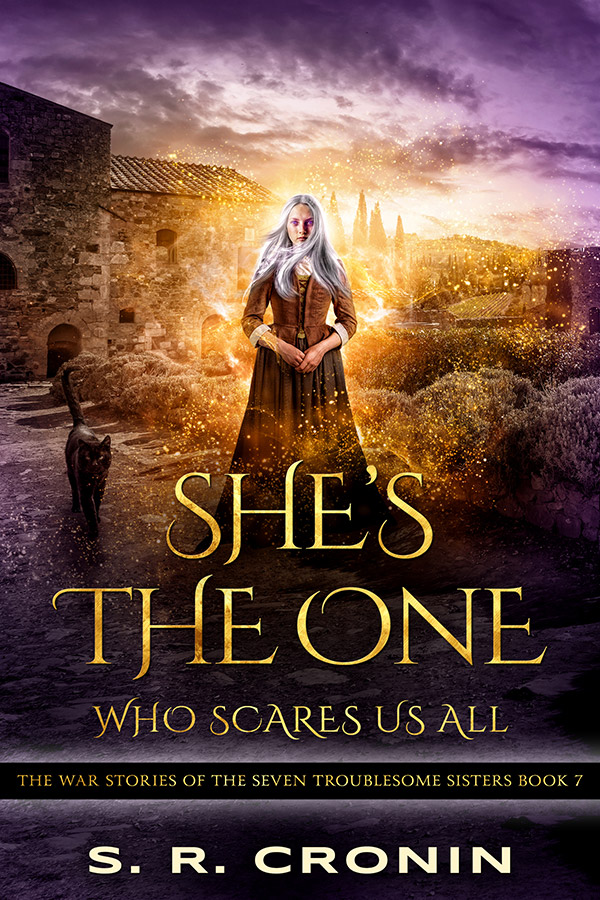
    S.R. Cronin has a new historical fantasy coming out (The War Stories of the Seven Troublesome Sisters book 7), and we have the cover reveal: She’s the One Who Scares Us All.

    Plus there’s a giveaway!

    Iolite, the youngest of seven sisters, was born a frundle, a rare condition that makes her both shunned and feared in Ilari. This has made her family doubly protective of her, even though she only wants to live a normal life and have the sorts of adventures her sisters do.

    Although frundles suffer from some physical and emotional challenges, they also have valuable powers that no one discusses. Iolite learns more when she forges a connection with a roving army on horseback from far away Mongolia. She soon learns that the adventure-loving men she enjoys riding with in her visions are planning to invade her homeland.

    When the Mongols send envoys to discuss terms of surrender, Iolite goes into a trance and serves as translator. Her family fears for her, knowing such trances can damage a frundle’s health. But her own people become a more serious threat to her when a secret cabal inside of Ilari’s army contrives to imprison Iolite and force her to become on ongoing source of information.

    How much does a daughter of the realm owe her country? Iolite has plenty of time to ponder the question trapped in her cold dark cell.

    What she does once she is freed will determine the fate of her people.


    Universal Buy Link

    About the Series


    The War Stories of the Seven Troublesome Sisters consists of seven short companion novels. Each tells the personal story and perspective of one of seven radically different sisters in the 1200s as they prepare for an invasion of their realm. While these historical fantasy/alternate history books can be enjoyed as stand-alone novels, together they tell the full story of how Ilari survived.

    Which sister saved the realm? That will depend on whose story you are reading.

    How do they do it? Each sister offers surprise information on why this didn’t go as anyone planned.


    Giveaway

    S.R. is giving away a $10 Amazon or B&N gift card (winners choice) with this tour:

    a Rafflecopter giveaway

    Direct Link: http://www.rafflecopter.com/rafl/display/b60e8d47231/?


    Excerpt

    “What’s your name?”

    I didn’t know whether to answer the stranger or not. We seemed to both be in jail, yet I had no idea why. He wore well-tailored clothes on his tall, thin frame, so other than looking like he could use a good meal or two, he appeared refined.

    “What are we doing in here?” I said.

    “Ah, yes. That is the question. You’ll figure it out in time.”

    We stared at each other between the thick metal bars. Me annoyed. Him amused.

    “Iolite. My name is Iolite.”

    “Really? Another one named for a stone? Your parents certainly lacked imagination, didn’t they?”

    I said nothing. I’d learned long ago that engaging in meaningful conversation with the people in these dreams was pointless. I avoided it.

    I already knew I’d meet this man eventually. If my previous dreams were any indication, he’d look the way he did here but he’d speak for himself, not echo my thoughts. We might find ourselves in jail when it happened, but more likely it would just feel like a jail to me. I’d probably meet him at a time when I felt confined by circumstances. Sadly, my dreams conveyed more about my future emotions than they did about any future reality, making their information hard to use.

    “I’ve had enough of this,” I said to him. “I’m going to wake up.”

    He shrugged. “Suit yourself.” Then he chuckled. “See you around.”

    He kept laughing at his own witticism until he went into a fit of coughing and I woke up grateful to be in my small cot. Many of the girls at the school shared rooms with others, but I was allowed to sleep alone. At times like this, it was a blessing.

    I pulled the blankets closer around my body trying to stay warm, thinking I didn’t mind the physical oddities life thrust upon me when it made me a frundle. Okay, my short stature was sometimes a nuisance but I rather liked my silver hair. I found my purple eyes attractive, too, though plenty of others averted their gaze rather than look into them. I always wondered what they feared.

    My dreams, however, did present an actual problem. They had started a year ago, and happened more often now, leaving me wide awake in the middle of the night filled with questions. I kept both the dreams and the questions to myself. I knew people didn’t mind frundles, as long as they stayed in the background and caused no trouble.

    The only troublesome ones were the ones who had the dreams. Or worse yet, the dreams and episodes.

    But I wasn’t that kind. Not yet. Not as far as anyone knew.

    Because I’d never had a single episode. For you can hide the dreams, but there is no way to hide that.


    Author Bio


    S.R. Cronin


    Sherrie Cronin is the author of a collection of six speculative fiction novels known as 46. Ascending and now writes a historical fantasy series called The War Stories of the Seven Troublesome Sisters. The synopses of her books makes it obvious she is fascinated by people achieving the astonishing by developing abilities they barely knew they had.

    She’s made a lot of stops along the way. She’s lived in seven cities, visited forty-six countries, and worked as a waitress, technical writer, and geophysicist. She’s lost several cats but acquired a husband who still loves her and three kids who’ve grown up fine, both despite how odd she is.

    These days she lives in the mountains of Western North Carolina, where she also answers a hot-line, does things to improve her writing, and volunteers for the Science Fiction Writers of America (SFWA) of which she’ s proud member.

    It is her life’s dream to tell these kinds of stories or be Chief Science Officer on the Starship Enterprise. She admits to occasionally checking her phone for a message from Captain Picard, just in case.

    Author Website: https://troublesome7sisters.xyz/

    Author Facebook (Author Page): https://www.facebook.com/46Ascending

    Author Twitter: https://twitter.com/cinnabar01

    Author Instagram: https://www.instagram.com/s.r.cronin/

    Author Goodreads: www.goodreads.com/author/show/5805814.Sherrie_Cronin

    Author Amazon: www.amazon.com/Sherrie-Cronin/e/B007FRMO9Q


    Other Worlds Ink logo


  • The Left Hand of Dog by SI Clarke ~ Blog Tour, Excerpt & Giveaway

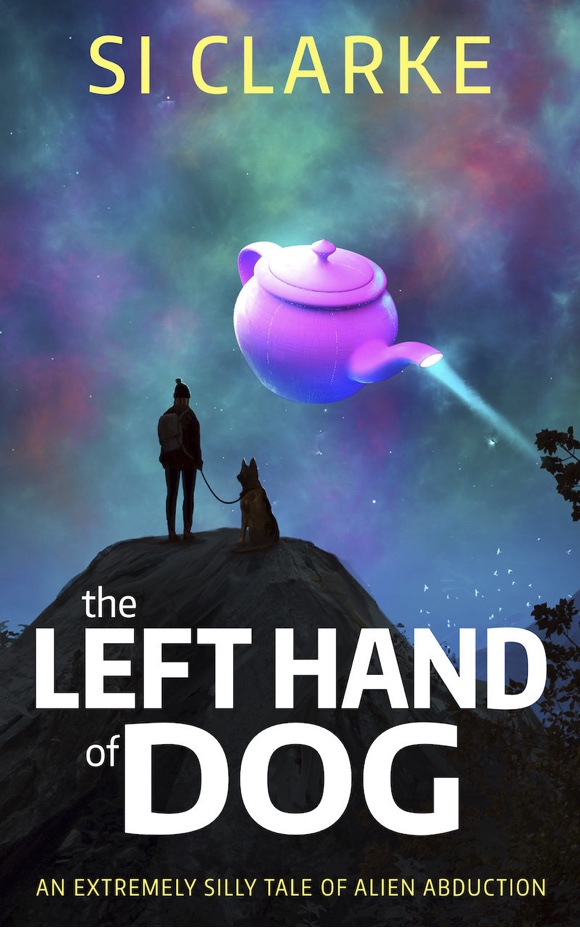
    The Left Hand of Dog - SI Clarke

    SI Clarke has a new quirky queer sci-fi book out (ace/aro/agender): The Left Hand of Dog. And there’s a giveaway!

    Escaping intergalactic kidnappers has never been quite so ridiculous.

    When Lem and her faithful dog, Spock, retreat from the city for a few days of hiking in Algonquin Park, the last thing they expect is to be kidnapped by aliens. No, scratch that. The last thing they expect is to be kidnapped by a bunch of strangely adorable intergalactic bounty hunters aboard a ship called the Teapot.

    Falling in with an unlikely group of allies – including a talking horse, a sarcastic robot, an overly anxious giant parrot, and a cloud of sentient glitter gas – Lem and the gang must devise a cunning plan to escape their captors and make it back home safely.

    But things won’t be as easy as they first seem. Lost in deep space and running out of fuel, this chaotic crew are faced with the daunting task of navigating an alien planet, breaking into a space station, and discovering the real reason they’re all there…

    Packed with preposterous scenarios, quirky characters, and oodles of humour, The Left Hand of Dog tackles complex subjects such as gender, the need to belong, and the importance of honest communication. Perfect for fans of Charlie Jane Anders’ Victories Greater than Death – especially ones who enjoy endless references to Red Dwarf, Star Trek, and Doctor Who. This book will show you that the universe is a very strange place indeed.

    Warnings: anaphylactic shock, minor injury to a dog, this book is not for TERFs.

    Publisher | Amazon US | Amazon UK | Amazon CAN | iBooks | Barnes & Noble | Kobo | QueeRomance Ink | Universal Buy Link | Goodreads


    Giveaway

    SI Clarke eBooks giveaway

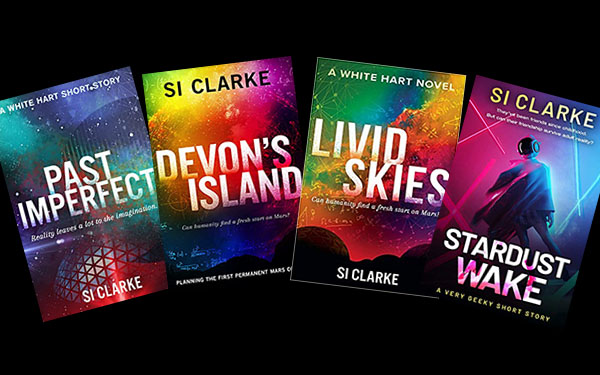
    SI Clarke is giving away four eBooks with this blog tour:

    a Rafflecopter giveaway

    Direct Link: http://www.rafflecopter.com/rafl/display/b60e8d47201/?


    Excerpt

    MEME4 - The Left Hand of Dog

    Copyright © 2021 by SI CLARKE – All rights reserved.

    No part of this book may be reproduced in any form or by any electronic or mechanical means, including information storage and retrieval systems, without written permission from the author, except for the use of brief quotations in a book review.

    Startled by the sound of movement behind me, I whirled around to face three … they had to be children in bunny costumes. ‘What?’ That’s what they had to be, right? I mean, they weren’t actually rabbits. Definitely not. For one thing, they stood upright. Real bunnies don’t normally do that, do they? For another, they were about the size of Spock.

    But the costumes looked real in that no skin showed through – not even on their faces – and I couldn’t see any zips. Also, I was pretty sure rabbits didn’t come in pastel rainbow colours. Actually, they reminded me of a toy I’d had as a child. Bunnyboo, I’d called it. Four-year-old me was terribly inventive.

    ‘Check out your floopy-floppy ears! How adorable are you?’ Nervous sarcasm still intact then.

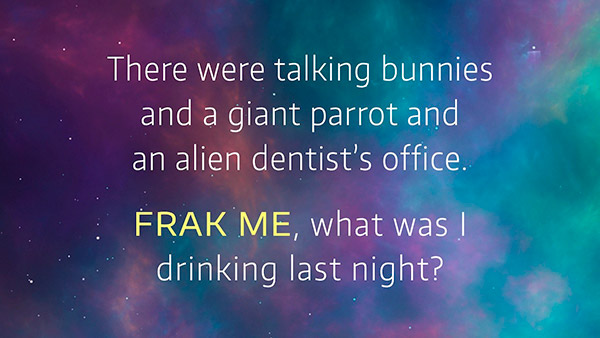
    I was nauseated enough that shaking my head seemed like a bad idea. ‘It was beer I had last night, right? Not, like, psychedelic mushrooms? Maybe some natural tree spore that makes a person have trippy visions?’ No one answered me. Or even looked at me.

    Spock sat neatly and dropped her brain in my lap. She lifted a paw towards the nearest of the bunnyboos – for want of a better word. The creature’s mint green fur matched the emerald hue of its humongous Disney princess eyes. ‘Yip,’ said Spock in her smallest, most polite voice.

    This is not happening. I must be dreaming. Or hallucinating. Something.

    Pulling a device from a holster like a carpenter’s apron, the bunnyboo pointed it at Spock. Or maybe it was merely reading what was on the screen – if it even had a screen. Who was I kidding? I had no idea what they were doing.

    Another, slightly taller bunnyboo – this one periwinkle blue with eyes like Wedgewood plates – stepped forwards and ‘spoke’ to Spock as well. That is, its mouth moved and Spock’s full attention was on it. But no sound emerged. Spock yipped again in response to whatever it was I couldn’t hear.

    Spock pointed at me with her long, sable nose then looked back at the bunnyboos and emitted a low noise, not quite a growl.

    ‘Would someone please tell me what the bollocking pufferfish is going on here?’ I demanded. Okay, not demanded. Requested. Well, pleaded. Whined, maybe. Whatever verb it was I verbed, no one paid me any heed.

    The bunnyboos of my strange hallucination were too deeply engrossed in their silent conversation with my very real dog to spare me any of their attention. It was like watching a TV on mute – except I could hear movements and breathing and the sound of my heart beating a drum on the inside of my chest.

    After a few further moments of this bizarre fever dream, Spock leapt down out of the coffin and turned to face me. She sat on her haunches and looked me in the eye. Then she lifted one paw at me in a clear imitation of the ‘stay’ command I used with her.

    A bunnyboo with heather purple fur lowered a rope lead over Spock’s head. Spock stood and followed them from the room.

    ‘Where are you taking my dog, you fluffy bastards?’ I clambered out of the coffin-bed and scrabbled after them as fast as my besocked feet would carry me. But the thick metal door slid shut seconds before I got to it.

    I pounded impotently on the door, screaming, ‘Spock! Come back. Don’t let those fuzzy arseholes hurt you.’ Unable to find a door knob or control panel or anything, I leant against the wall next to the door and slid down until I landed on my arse. I shivered and hugged my knees to my chest.

    Why can’t I wake up? Letting my head fall forwards, I cried for a bit, whimpering Spock’s name periodically.


    Author Bio

    SI Clarke

    SI CLARKE is a Canadian misanthrope who lives in Deptford, sarf ees London. She shares her home with her partner and an assortment of waifs and strays. When not writing convoluted, inefficient stories, she spends her time telling financial services firms to behave more efficiently. When not doing either of those things, she can be found in the pub or shouting at people online – occasionally practising efficiency by doing both at once. 
As someone who’s neurodivergent, an immigrant, and the proud owner of an invisible disability, she strives to present a diverse array of characters in her stories.

    Author Website: https://whitehartfiction.co.uk

    Author Twitter: https://twitter.com/clacksee

    Author Goodreads: https://www.goodreads.com/clacksee

    Author Liminal Fiction (LimFic.com): https://www.limfic.com/mbm-book-author/32693/

    Author Amazon: https://www.amazon.co.uk/SI-CLARKE/e/B082GXW66G/

    Other Worlds Ink logo