The year – and decade – is rushing to an end, but here’s a way to start the new year and decade off right. Find a new series to engage you in the fantastic.
All the month, I’m joining with other Sci-Fi/Fantasy authors to give away the first book in a series. There are over 180 different books to choose from so there have to be a few you’ve never tried, but should. Click the link below to be taken to the giveaway page.
If you find something particularly interesting, let me know. I’m always interested in new good stuff and I might not have read it yet,
As we leave this year, (and decade) I want to thank everyone for their continued support. I wish you all peace, joy, happiness, and lots of awesome reading.
USA Today Bestselling author, Nicola Cornick stopped by today to share the “timeless” nature of her writing. Welcome to the World of Make Believe, Nicola!
Crossing Genres, Crossing Time
Hello and thank you for welcoming me to the blog! My name is Nicola Cornick and I write what is often called “timeslip” novels. By timeslip I mean a narrative that weaves together two or more stories set in different time periods rather than a book where a character or group of characters actually travels through time by some means. Of course it’s not always that straightforward. Timeslip books may also contain some time travel or magic or other paranormal elements. My first timeslip novel, House of Shadows, for example, combined three historical eras, a small amount of time travel, ghosts, visions, folklore and magic. Timeslip is a difficult genre to pin down and that may be part of the problem authors have sometimes with selling the idea of it to publishing professionals. It’s a type of novel that crosses genres as well as crossing time. There can be lots of different elements in the story: romance, crime, mystery and fantasy. A timeslip author is effectively writing three different sub-genres at the same time – contemporary, historical and paranormal.
It’s always interested me that there is a resistance amongst many agents and publishers to the idea of timeslip novels being big sellers when these are themes that appeal to a broad readership. Almost always, when I get into a discussion with an agent or publisher about the genre, the response is that it’s a small niche market, there aren’t sufficient readers who want books like that, and a timeslip author won’t ever sell in huge numbers. I’d like to challenge these ideas and try and change perceptions. Firstly I’d like to challenge the concept that insufficient readers are interested in timeslip. Okay, so my research into this is anecdotal, conducted amongst friends and fellow readers who love timeslip novels as I do but you only need to look more broadly at best-selling authors like Kate Morton to see that there is an appetite for books set in dual time periods. In the past few years there has been an explosion in books with dual narratives and literary authors as well as genre authors have been embracing the idea. If you look widely you will see that “timeslip” in its different guises is everywhere. “Life After Life” by Kate Atkinson, “The Time-Traveller’s Wife” by Audrey Niffenegger, even “Time’s Arrow” by Martin Amis all play with the same ideas or time travel or reincarnation or other supernatural elements. It’s even a fundamental theme in Dr Who. It has a long and distinguished history as well, via H G Wells, Daphne Du Maurier and Barbara Erskine, to name but a few.
What is it about writing timeslip that appeals to me? I love the idea of a mystery that occurs in the past and is then solved in the present, and I love writing about women who usually only feature in the footnotes of history. For my second book, The Phantom Tree, I researched and wrote about Mary Seymour, the daughter of Queen Catherine Parr and Thomas Seymour, whose story had fascinated me from childhood. My heroines are all strong women whose role in history has either been forgotten or neglected. I enjoy bringing their stories to light. Readers love the idea of there being connections between the past and the present and the way that stories from hundreds of years ago still resonate now. My aim is to tell a great story with richly layered characters within an authentic historical framework, and she that its message can be as relevant now is it was hundreds of years ago.
About Nicola
Nicola Cornick grew up in Yorkshire and
studied History at the University of London and at Ruskin College Oxford. She
worked in academia for a number of years before becoming a full-time writer.
She is the author of acclaimed dual-time mysteries as well as of award-winning
historical romance.
When she isn’t writing, Nicola volunteers
as a guide and researcher for the National Trust at the 17th century
hunting lodge Ashdown House. She has given talks and chaired panels for a
number of festivals and conferences including the London Book Fair, the
Historical Novel Society and the Sharjah Festival of Literature. Nicola also gives talks on public and local
history topics to WIs, history societies and other interested groups.
She is a former Chair of the Romantic Novelists Association, Wiltshire Libraries Writer in Residence and trustee of Wantage Literary Festival, and in her spare time is a puppy walker for the Guide Dogs charity.
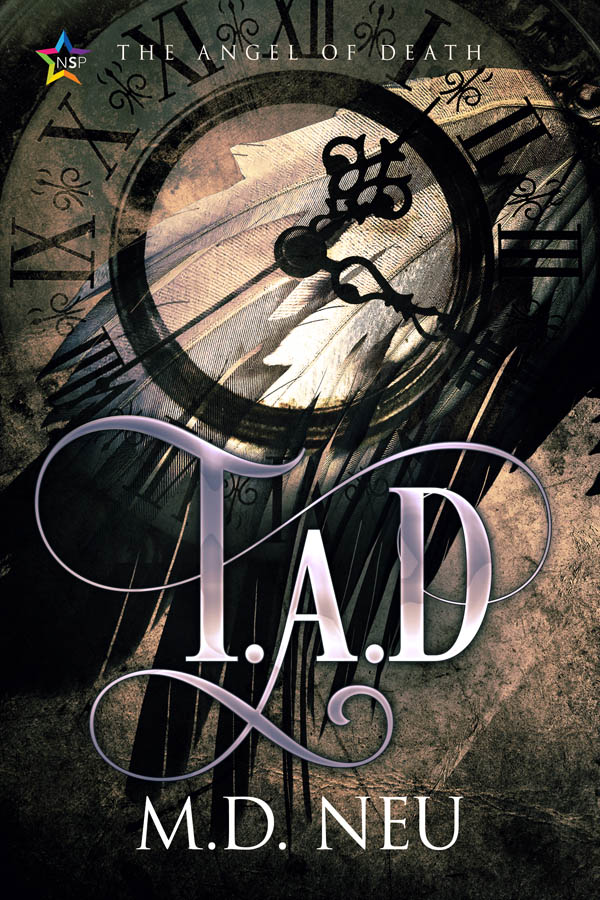
Have you gotten your copy of M.D. Neu’s T.A.D – The Angel of Death yet? Print and eBook copies are available now andyou can pick up a copy from one of your favorite vendors at this link! If you missed our cover-reveal post a few weeks back, you can check out the blurb and and excerpt from the first chapter of T.A.D. here. Congrats on the new release, M.D.!
Giveaway
There’s still time to enter this giveaway! M.D. Neu is giving away a $20 Amazon gift card with this reveal and tour. Enter via Rafflecopter:
Summer (at least in the Northern Hemisphere) doesn’t officially end until the autumnal equinox on September 23rd, but most parents mark the end of summer when the kids go back to school. As the days get shorter, that means we spend more time inside. And what better way to spend that extra inside time than discovering new authors who you can fanperson. To help you find new reading material, I joined a fantasy eBook giveaway this month. There are 50+ different books to choose from, which I have to think is more than enough to get you through the fading light of autumn.
Now, being realistic, I can’t read all of the ones I find interesting, but if you get a chance, please leave a comment with any that you read that you enjoy, or have read and enjoyed in the past.
M.D Neu has a new MM paranormal/alternate universe book out: T.A.D – The Angel of Death.
Tad loves bouncing around in time and watching mankind grow and change. He loves humanity and helping when he can. However, his job isn’t conducive to helping people. He’s an Angel of Death.
Doug is fun loving and a drama queen. Despite his witty exterior, he has a dark history and is prone to self-destruction. He’s also an amazing drag queen and hairstylist with big dreams.
When Tad pushes the boundaries of his duties too far, his angel wings are stripped away from him, and he is sent to New York City to live as a human. Lost and alone he ends up meeting Doug, and the two start a friendship that will shape them both and last a lifetime. But nothing is simple when you’re dealing with a former Angel of Death and a Drag Queen. Could these two cause the fabric of our world to collapse or will they manage to keep the future as it should?
Doug glanced up at the big void where the buildings once stood.
How could anyone do that? All those people, and for what? Thank God, no one I know was there. Thank goodness, Garret’s train was running late. Even from across the river, seeing the buildings fall, one minute there, the next not, awful. Not knowing if Garret was alive or dead. The not knowing was awful, and it seemed to last forever. Then getting his call when the phones were back up. It was a relief. Still, the not knowing? Horrible. How do survivors do it?
Doug shuddered. He had to look away before he started to cry again. That day. The world wasn’t the same. How could it be? Would it ever be the same again? He swiped at his eyes, keeping the tears he was trying to hold back from dropping. He caught his reflection in one of the storefront windows and fussed with his blond spiky hair.
One year.
The months right after the attack had been hell for everyone. People from all over the world sent support and offered help. But New York was moving on, as it should. They already had seven different architects offering new designs to fill the empty skyline. Mayor Giuliani was doing everything he could for the city, and there was even talk of him running for president.
Doug checked his flip phone and picked up his pace. He was running late. He shouldn’t have spent the night at Tim’s, but leaving such a sexy guy was no easy task. Not to mention they might have partied too much.
I doubt that is even possible. You can never party too much.
There was a large group of mourners, and he had to step to the side to let them pass. He took a deep cleansing breath, pushing all thoughts from his mind, and started walking again. He rushed past the families and friends heading to Ground Zero. Now he had to hustle to make it to work. He’d gotten lucky no one he was familiar with was killed. Still, every time he thought about the attack and looked up at the twin lights filling the night sky, he wanted to cry.
Monsters.
Why President Bush didn’t blow up the whole of the Middle East after the attack, Doug would never understand. Instead, the president sent troops to Afghanistan, searching for Osama bin Laden and taking out Al-Qaeda.
Just as long as they find and kill the monsters who did this to us.
Doug couldn’t help but stop again and glance up to where the twin towers once stood. He quickly wiped at his eyes. “I need to get out of here.” He moved over to the brick façade and leaned against the wall as more people passed him, heading to the memorial ceremony.
“So much suffering and for what?” Doug mumbled. He started walking again, taking a deep breath and trying to avoid the crowds. A woman in a dark jacket passed him and bumped his shoulder, causing him to step closer to an alley. She didn’t bother saying anything; however, Doug thought she said something about his size. He caught his reflection again. He hated how everything made him feel so fat. Nothing he wore looked right on him. Even the baggy pants still made him look fat and messy. He would need to start at the gym if he wanted to continue dating Tim and keep up with his partying. He frowned.
At least I have good hair.
He played with the spikes of his hair.
“It’s my fault,” a gruff voice whispered from behind him.
Doug startled and turned around, but no one was there. He glanced over to the dumpster.
Sitting there, a raggedy black man, with kinky hair in desperate need of a cut and wash, stared at him. The man had the most beautiful green eyes Doug had ever seen. The rich tones of his skin really made his eyes pop, quite possibly the unkempt man’s best feature. The man was in shambles, and tears streamed down his dirty cheeks.
The anniversary affects everyone.
“I did this,” the man groaned through his sobs. “And now I’m being punished.”
Doug wasn’t sure what to do or say. Should he walk away and get to the salon? Leave what appeared to be the crazy homeless guy alone? Could he do that now that they made eye contact? Could he do that today of all days? The man needed help. The man needed a shower and clean clothes. Perhaps, if he talked to him, that would be enough…well, the talk and ten bucks.
That’s what Shannon would do. Talk to him and give him money. Shannon was such a kind soul, and I need to be more like him, more like he was. To honor him. Just like my drag name. Maybe Miss Enshannon needs to be more. I need to be more.
Doug’s heart ached at the memories of Shannon and how wonderful he was. When he picked his drag name there was no doubt on what it would be, but to honor someone you loved had to be more than using their name.
“It’s not your fault.” He knelt close to the man, still keeping his distance just in case. “It was the work of terrorists. They killed all those people, not you.”
“I should have stopped them. I should have done more,” the dirty man moaned.
“Oh, baby, no one could have done more,” Doug offered. Some people thought the government knew about the attack beforehand and the president allowed it to happen. Doug didn’t buy it. Why anyone listened to these people was beyond him, but they did. He just wished they would shut up and crawl back under the rocks they came from. They weren’t helping anyone, and in the long run, their remarks and comments only hurt people more.
“Now, I’m being punished. They sent me here and took my wings,” the man whispered.
Was this guy a pilot? Oh, that would be awful. I bet he was supposed to fly one of the planes, and he couldn’t take it. Survivor’s guilt.
Author Bio
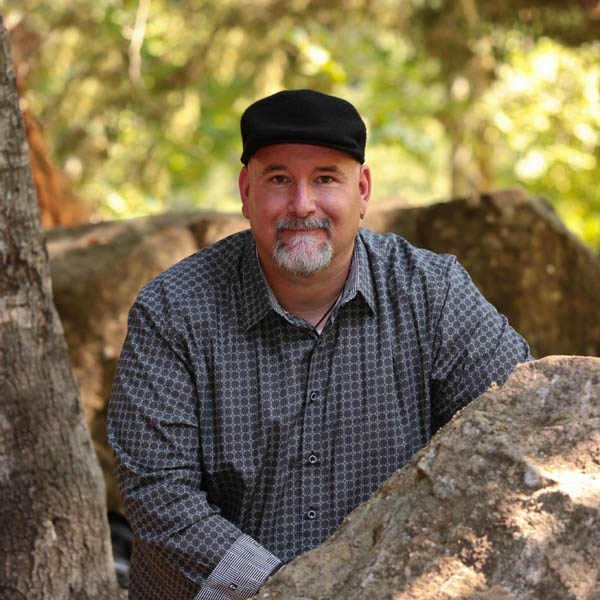
M.D. Neu is a queer Fiction Writer with a love for writing and travel. Living in the heart of Silicon Valley (San Jose, California) and growing up around technology, he’s always been fascinated with what could be. Specifically drawn to Science Fiction and Paranormal television and novels, M.D. Neu was inspired by the great Gene Roddenberry, George Lucas, Stephen King, Alice Walker, Alfred Hitchcock, Harvey Fierstein, Anne Rice, and Kim Stanley Robinson. An odd combination, but one that has influenced his writing.
Growing up in an accepting family as a gay man he always wondered why there were never stories reflecting who he was. Constantly surrounded by characters that only reflected heterosexual society, M.D. Neu decided he wanted to change that. So, he took to writing, wanting to tell good stories that reflected our diverse world.
When M.D. Neu isn’t writing, he works for a non-profit and travels with his biggest supporter and his harshest critic, Eric, his husband of twenty plus years.
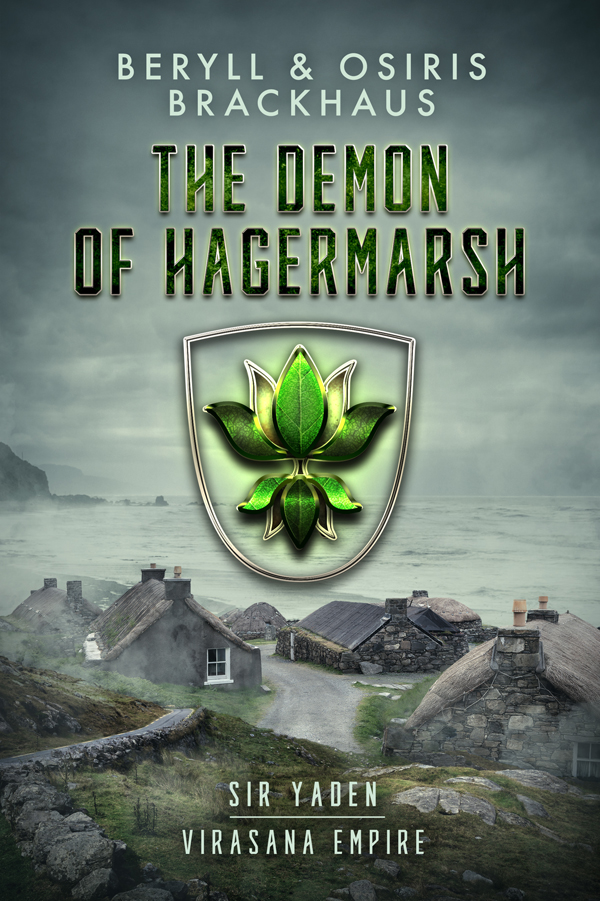
Beryll and Osiris Brackhaus have a new MM fantasy book out: The Demon of Hagermarsh.
“The Emperor cares for each and every one of his subjects.”
Many consider the catchphrase of the imperial Lotus Knights to be nothing more but well-polished propaganda, but for Yaden, it is a way of life.
A young Lotus Knight himself, his first mission in service of the Emperor sends him to the remote village of Hagermarsh, a suspiciously friendly place on a planet known for its inhospitable people. But how to uncover a demonist coven when nothing bad ever happens? Getting to know the villagers only makes things more difficult – the motherly fishmonger surely isn’t a demonist. Nor the gruff leader of the local militia. And definitely not the cute baker from across the street.
Or are they?
Come discover a dazzling, hopeful universe of knights and monsters, of psions, aliens and ancient deities! The Demon of Hagermarsh is the first book of ‘Sir Yaden’, an epic SF saga of grand adventure, romance, bromance and family, set in the multi-faceted Virasana Empire. It is a romantic adventure and can be read as a standalone.
Excerpt
“How did you come to work for Master Darios?” Colin asked after a while.
“My parents paid him to take me on as an apprentice,” Yaden told the story MissionPrep had set up for him. “After learning the trade, I was supposed to have my own shop at some point. But it turned out I can’t seem to learn to read and write. The letters keep jumping around in front of my eyes.” Colin looked like he was going to say something pitying, so Yaden quickly continued. “Master Darios doesn’t mind me, though, so he kept me as his shop assistant, even when he moved out here. Means he doesn’t have to talk to the customers much. He doesn’t like people.”
“Well, you could always go into a career as crab picker,” Colin said, clearly aiming to cheer him up. “One of these cages is worth five chicks.”
Yaden chuckled. “Actually I prefer working with a roof over my head most of time. And I like my job.”
“So if Master Darios doesn’t like people I’m guessing he isn’t interested in getting married?”
“Say what?” Yaden wasn’t sure how Colin had jumped from one subject to the next and Colin looked slightly embarrassed.
“Sorry, bad habit.” He chuckled at his own silliness. “The elderly ladies of the village always try to match everyone up, and it’s infectious. At first, I got the usual suspicious treatment, but now that they have decided I’m alright, they keep trying to get me together with one of the girls. I bet they’ll do the same with Master Darios.”
Yaden wondered how that would go over with Darios. In all the years that Darios had been his guardian, he had never shown any romantic interest in anyone. Was that because he didn’t fancy anyone or because he had been too busy taking care of Yaden?
At least, Yaden was sure it wasn’t some strange notion that, as a slave, he would need Yaden’s permission. Their relationship had never been one of master and slave. More like child and single parent.
If it had been up to him, he would have freed Darios in a heartbeat, but there was no way of legally doing so apart from Darios marrying a commoner or being adopted by one, neither of which was an option in this case. Yaden could have bypassed the law by simply setting up Darios with enough funds to comfortably live on some other backwater planet where nobody would be aware he had ever been a slave, but Darios had refused that offer.
“I think they will find Master Darios rather reluctant,” Yaden tried to deflect Colin’s suggestion politely. “What about you? Are you with any of the suggested girls?”
“Naw. They are all too eager to call themselves ‘the baker’s wife’ and not interested in me at all. I had a few boyfriends back in Schimmelbach. But those were short flings. You know, guys picking me up as the cute trophy to brag about.”
No, Yaden didn’t know. Was that a thing that people did? Whatever it was, he very much thought that Colin deserved better.
“And you?” Colin asked. “Did you have a special someone before you moved here?”
“Still looking for the right one.”
That sounded cheesy, but it didn’t make it any less true. Between his job of keeping Erys safe and his training on Lagoona, he had never felt the urge to go and search for someone. If there was someone out there for someone like him, they would meet eventually. He cast a shy glance over to Colin. The way the baker flirted with him it sounded very much like Colin thought Yaden could be his special someone. Or at least, the shop assistant Yaden was currently pretending to be.
With a sinking heart, Yaden realised this was a lot more complicated than it had looked in the beginning. And it hadn’t looked simple at all.
Colin didn’t say anything, either, and they walked the rest of the way in silence, but again it was a comfortable silence. If Yaden weren’t pretending to be someone else, and if he were planning to stay here for real, he would be looking forward to spending more time like this. But he wasn’t, and it made his heart sink. He had a job to do, yes, but was it so wrong to want something for himself for once? If only that something weren’t so complicated and probably unattainable. Surely Colin would run the other way if he learned who Yaden truly was.
He still hadn’t sorted out his feelings when they reached the side entrance of the bakery.
Yaden handed over his basket of crabs with a shy smile. “So when can we eat them?”
Complicated feelings aside, Yaden wanted to eat those crabs. And he wanted to spend more time with Colin. Maybe going through this step by step was better than worrying about the problems of tomorrow.
“I need to boil them and they’ll marinade for a day before frying them up. So if you are free tomorrow evening…?”
“As it happens, I am.” Unless a demon went rampaging through the village, that was, but Yaden doubted this mission would wrap itself up that easily.
“Great. I’ll start preparing dinner after I lock up the shop, so you come over about an hour after that?”
“I’ll be there.”
For a moment longer, they stood in the soft drizzle. Yaden almost thought he should say something more, but he had no clue how to phrase his feelings. So when Colin turned away with a “see you tomorrow” thrown over his shoulder, he was almost grateful.
We hope you enjoyed your time in the Virasana Empire.
Yaden’s adventures continue in
Book #2 The Windmines of Bora Bora
You can find more information about the Virasana Empire at
We are Beryll and Osiris Brackhaus, a couple currently living our happily ever after in the very heart of Germany, under the stern but loving surveillance of our cat.
Both of us are voracious but picky readers, we love telling stories and drinking tea, good food and the occasional violent movie. Together, we write novels of adventure and romance, hoping to share a little of our happiness with our readers.
Beryll: An artist by heart, Beryll was writing stories even before she knew what letters were. As easily inspired as she is frustrated, her own work is never good enough (in her eyes). A perfectionist in the best and worst sense of the word at the same time and the driving creative force of our duo.
Osiris: An entertainer and craftsman in his approach to writing, Osiris is the down-to-earth, practical part of our duo. Broadly interested in almost every subject and skill, with a sunny mood and caring personality, he strives to bring the human nature into focus of each of his stories.
Michael G. Williams has a new queer sci fi book out: A Fall in Autumn.
WELCOME TO THE LAST OF THE GREAT FLYING CITIES
It’s 9172, YE (Year of the Empire), and the future has forgotten its past.
Soaring miles over the Earth, Autumn, the sole surviving flying city, is filled to the brim with the manifold forms of humankind: from Human Plus “floor models” to the oppressed and disfranchised underclasses doing their dirty work and every imaginable variation between.
Valerius Bakhoum is a washed-up private eye and street hustler scraping by in Autumn. Late on his rent, fetishized and reviled for his imperfect genetics, stuck in the quicksand of his own heritage, Valerius is trying desperately to wrap up his too-short life when a mythical relic of humanity’s fog-shrouded past walks in and hires him to do one last job. What starts out as Valerius just taking a stranger’s money quickly turns into the biggest and most dangerous mystery he’s ever tried to crack – and Valerius is running out of time to solve it.
Now Autumn’s abandoned history – and the monsters and heroes that adorn it – are emerging from the shadows to threaten the few remaining things Valerius holds dear. Can the burned-out detective navigate the labyrinth of lies and maze of blind faith around him to save the City of Autumn from its greatest myth and deadliest threat?
Michael is giving away an eBook copy of “Perishables,” book one of The Withrow Chronicles, with this post:
Everybody hates their Homeowner’s Association, and nobody likes a zombie apocalypse. Put the two together, and Withrow Surrett is having a truly craptastic night.
This excerpt comes from the second chapter of the book. To set this up, I’ll note that Valerius is a private eye in the far future. In his time, androids are referred to as “golems” and they’re considered to be sort of living saints: they embody the best of a former age, and they tend to wrap themselves in mystery in a way Valerius finds at least a little off-putting.
Valerius has awakened bruised and battered after getting beaten up by his last client. Alejandro – who is a golem – found him after and helped get him on his feet. Valerius then returned home, passed out, and had to hide from his landlady the next morning because he’s perpetually late on his rent.
I let out my breath and sat up, pulled on trousers, and
stretched to the sound of a hundred popping joints. Whatever kept the landlady
at bay was good enough, even if that meant hiding and holding my breath. I
cared far less about paying her rent than where I would get food or smokes—oh
wait, I’d quit smoking—or a cup of coffee.
Coffee, I thought. The memory of the stuff was
almost enough to wake me. I ran out of Buenos Dias Blend the day before, and I
didn’t have a penny to spend on more. I inspected a bottle of Old Indefatigable
on top of the filing cabinet. Whiskey in a coffee cup wouldn’t be anything new,
and neither would whiskey first thing in the morning, but something about
whiskey from a coffee cup first thing in the morning seemed unacceptably
perverse.
I lifted the bottle and put my hand on the stopper, but there
was a second knock, one much quieter and more reserved. It sounded an awful lot
like a customer’s knock: the sort of knock that said they were sorry for
bothering me but sorrier for having a problem in the first place, and still not
as sorry as they would be to pay. I put the bottle back on the file stand and
nudged the button to unlock the door.
Alejandro opened it and stepped inside as quietly as a cat in
a bassinet, then closed it behind him with a click the baby would have slept
through. Normally, the hinges squeaked and the door took jiggling to get
closed. I’d always heard a golem’s senses were way beyond ours, but I had no
idea. I blinked and set down my coffee mug, still empty of whiskey or coffee or
anything, and nodded. “Well.” I tried not to look surprised. I probably failed.
“Okay.”
Whereas it had been dark and dramatic a few days ago,
Alejandro’s skin was now an off-white with hints of gray where an egg’s shell
might have shades of beige or tan. His hair changed to a deep reddish purple. I
had assumed golems were fixed in their appearance, and in that moment, it
occurred to me to wonder why I ever assumed that in the first place. No reason
they can’t swap things around like any Plus.
Taking in his choices of colors, my mind kicked around words
like “eggplant” and “burgundy” before deciding they fell short. The golem’s
hair was pulled back and tied into a neat ponytail. It hung so that it hit the
middle of his back exactly between where his shoulder blades would have been if
he were a living man. He stood maybe two meters tall, maybe taller, easily
several centimeters taller than I am, so I had to look up a little to meet his
eyes. It had a sobering effect: he seemed instantly superior in the social
hierarchy.
I reminded myself everything about a golem is literally by
design. If he was tall enough to make most people look up to him, it could only
be a deliberate choice, almost certainly meant to convey authority—one I found,
ironically, a little off-putting.
Alejandro had good cheekbones, a pair of pale and expressive
lips, eyebrows that jutted at a barely noticeable obtuse angle over his eyes,
and a prominent Adam’s apple. I thought that was an unusual touch of mimicry
for something otherwise obviously constructed. Why bother with the laryngeal
prominence if anyone could tell he was made of some kind of cellulose and
bioplas? The various design choices taken together suggested ambivalence: maybe
a team expressing in their work some internal conflict about how human he
should or shouldn’t be, or maybe a Doc Frankenstein somewhere who was never
quite at peace with the idea of his or her creation.
My initial over-analysis of his design and execution bothered
me in the way I was always bothered by my detective’s reflex of seeing motives
behind every detail. But, I also knew a part of what bothered me about him was
what bothered me about the idea of golems in general: no one knows who made
them or where they came from. All anybody knows is they’re ancient. Sometimes
they’re very kind, and sometimes they’re assholes, and sometimes they’re just
sort of there, dissociated and distant in a way some people read as snobbery,
and regardless of what they’re like socially, absolutely none of them will
admit their origins. They’ve been asked plenty of times, of course, and the
urban legend goes that once in a while one of them will open up enough to say
she or he doesn’t know whence they came. I never liked that answer. It’s the
sort of non-answer politicians give when they want to make you feel like they
answered your question. It’s a deflection. I hate people who play that sort of
game.
The fact Alejandro was drop-dead gorgeous—as walking, talking
kewpie dolls go—didn’t help me get over my prejudices. If anything, it made me
wary. The most dangerous thing in the world is a good marketing campaign, and
he looked like a doozy.
“I hope you don’t mind I’m here.” He murmured it with a small
smile that seemed genuinely apologetic rather than the cocky sort of ironic I
would have expected from some biological Casanova. “I was concerned about you.”
I arched an eyebrow. Neither of us moved. I stood between the
cabinets and my desk, Alejandro right inside the door, maybe five meters away.
A little sunlight slid down the slats in the still-closed blinds in my window,
and I still stood barefoot in dingy denim trousers and no shirt. “You figured
out who I am.” I pointed a thumb at the handset on my desk. “You could have
called.” I picked the cup back up.
Perverse or no, I was going to fill it with whiskey.
Partly I love this scene because it’s the moment Alejandro becomes Valerius’ client, which is the engine driving the rest of the book. But partly I love this scene because it’s sort of the last gasp of the old Valerius, before he hears Alejandro’s story, before everything changes for him. It’s the last time we see a version of Valerius that truly believes he’s all washed up and wrung out. He doesn’t think there’s any reason left to try – at anything, really – and that nihilism is eating him alive. I realized as I wrote the book that Valerius hated himself for all sorts of reasons before Alejandro came along, and though this isn’t a romance, it’s certainly a deep and meaningful relationship that develops into a lifeline for Valerius, a way to imagine a future for himself. (And, for various reasons, that’s strongly bittersweet.)
Valerius can be a jerk to people, and meeting Alejandro doesn’t “fix” him, but it does shift his perspective. It creates an opportunity for Valerius to re-learn a little more empathy, and to step back from the edge of the abyss of his own problems and get some perspective on them. Any detective story is ultimately about someone who feels empathy for others, because that’s their secret to figuring out the mystery. But at this point in his life, Valerius’ empathy has kind of dried up. The only way to learn empathy – or to re-learn it – is often to receive it from others, and that happens for Valerius in this book at exactly the time when he needs it most. This story becomes a way for Valerius to feel like he can still make a difference in the world, still have purpose, no matter what else he has weighing on him or how much time he might or might not have left.
What are you working on now, and when can we expect it?
I’ve just signed a deal for 4 more books in the world of A Fall in Autumn and will be writing the
sequel over the summer. I can’t wait! I expect the second book, to be titled New Life in Autumn, will be out a year
from now.
Later this year I have several other works, already finished and
coming out from Falstaff
Books:
Nobody
Gets Out Alive will be coming out sometime soon, probably over the summer. It’s
the fifth and final(-ish) book of The Withrow Chronicles, my
suburban vampire series about a guy who became a vampire in the 1940’s and has
declared himself the boss of all of North Carolina’s blood-drinkers. The series
is a ridiculously fun sequence of genre mashups – vampires and zombies,
vampires and superheroes, vampires and spy thrillers, vampires and war,
vampires and their witch frienemies – telling a story that gets increasingly
complex as Withrow slowly but surely learns the world of the supernatural is
much bigger than he thought.
I also have the four-novella San Francisco urban fantasy series, SERVANT/SOVEREIGN. It starts with Through the Doors of Oblivion, and it’s
about some of the most evocative moments in San Francisco’s history – such as
the 1906 earthquake and fire – and witches and demons and time travel and real
estate scams. I’m just exceptionally proud of it, and I get to really focus on
the features of San Francisco I most adore, which are not necessarily the parts
of the city they try to highlight for tourists. I don’t know exactly when that
one is due out, either, but it’s made it through the content edits and the
copyeditor and it’s now with the proofreader, so it’s getting close!
And, last but not least, I’ve reached the rights-reversion point
on a bunch of short stories I sold years ago so I’m possibly going to reclaim
those rights and produce an anthology of short stories and nonfiction essays
I’ve written for various venues. That’s a maybe, though. We’ll see.
Thank you so much for having me – I really appreciate your and
your readers’ time and attention. I hope you enjoy A Fall in Autumn and I would love to hear from you about it!
Author Bio
Michael G. Williams writes wry horror, urban fantasy, and science fiction: stories of monsters, macabre humor, and subverted expectations. He is the author of three series for Falstaff Books: The Withrow Chronicles, including Perishables (2012 Laine Cunningham Award), Tooth & Nail, Deal with the Devil, Attempted Immortality, and Nobody Gets Out Alive; a new series in The Shadow Council Archives featuring one of San Francisco’s most beloved figures, SERVANT/SOVEREIGN; and the science fiction noir A Fall in Autumn. Michael also writes short stories and contributes to tabletop RPG development. Michael strives to present the humor and humanity at the heart of horror and mystery with stories of outcasts and loners finding their people.
Michael is also an avid podcaster, activist, reader, runner, and gaymer, and is a brother in St. Anthony Hall and Mu Beta Psi. He lives in Durham, NC, with his husband, two cats, two dogs, and more and better friends than he probably deserves.
Warren Rochelle stopped by the blog today for some good ole Q&A on world building, favorite works, and his writing process. Thanks for stopping by, Professor!
AQG: So, tell us three things about your worlds that your readers love!
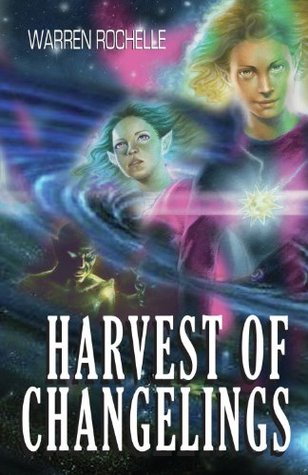
WR: The first thing that comes to mind would be what I call the intersection of the magical and mundane. By mundane, I mean stories in which the characters exist in worlds the readers know. For example, my novel, Harvest of Changelings, is set in the Triangle region of central North Carolina. Characters walk (or run, if the bad guys are after them) down real streets, drive real cars. Yes, there is some fictionalizing, a few name changes, but not very much. By magical, I mean that in this mundane world the characters encounter witches and dragons and spells and charms. Reality is not as it seems. This intersection fascinates me.
The second thing, which could be an extension of the first, is that as the characters deal with magical bad guys, they also deal with issues of the mundane world, such as learning disabilities, and abusive parents. To me, this makes the world richer and the characters far more human.
The third thing that comes to mind is an attention to detail on multiple levels. A few examples: if there are two moons, then there needs to be two tides, the correct spelling of 7-Eleven, and so on.
AQG: What are your biggest challenges when it comes to world building?
WR:
Getting the details right!
Finding the answers to get those details right.
Remembering the details. By that I mean once something is established as part of the world, I have to make sure that this is maintained throughout the story and not forgotten or let slide.
Telling the truth.
AQG: What are some lessons you’ve learned in your writing journey?
WR:
To take my time. Yes, deadlines must be met, but stories tend to have their own time and I try to plan ahead if I am on a deadline, so that the story can do the gestating it needs. Alas, this doesn’t always work.
Stories and novels need many, many, many drafts. The stories that come completely formed, like Athena from the head of Zeus, are rare indeed.
To remember what one of my first writing teachers told me: to get out of the way of the story and let the dream tell itself to me.
And to not give up. The publishers of my four novels have all, sadly, gone out of business. But I keep writing and sending things out. Besides, I would be a lousy plumber.
AQG: What are your three favorite sci-fi/fantasy book books, movies, or TV shows?
WR: Just three?
The first book that I think of is A Wrinkle in Time. I reread it every so often.
Neverwhere, by Neil Gaiman. I am quite fond of Richard Mayhew.
The Dispossessed, by Ursula K. Le Guin. I love Shevek.
And …. Okay, just one more, Battlestar Galactica (2004-2009).
AQG: What would be your top three examples of stellar character development?
WR:
Shevek is a character whose growth and development I find fascinating and believable. He has core truths to which he remains faithful, but he is forced to grow and change as his life demands, and he chooses to grow and change and mature as well. His growth is complicated, contradictory, and sometimes ambiguous and confusing—as it is for most of us.
I hope it is okay to use my own characters here. (AQG: Yes, please!) Given that, I would mention my character, Russell White, in Harvest of Changelings and The Called. When readers first meet Russell in Harvest, he is around 12 years, and in the fifth grade (he had to repeat kindergarten and first grade). He has a learning disability and an abusive father. Russell’s stepmother hates him. His mother abandoned him when he was little, choosing to taking his younger brother with her and not Russell. Russell is angry. But, when he comes into his magical powers and makes friends, especially Jeff, he begins to slowly grow out of the desert of his early childhood. The reader gets to experience Russell’s development, which is sometimes ragged and uneven, with lapses, as it would be for almost all of us. Russell makes peace with, and learns to live with, his past. However, he still has to deal with its shadows.
I had thought, briefly, to discuss the development of Jeff Gates, who becomes Russell’s best friend in Harvest. Like Russell, he almost must grow out of the desert of his childhood—in his case, sexual abuse by his father. But I am thinking maybe this question is meant to be about characters more familiar to the general reader. In that case, I think J.K. Rowling did a fine job developing Harry’s character through the seven novels in the series. We get to experience Harry’s growing up and coming of age. We see Harry as “tween” who sees the world as more black and white than it can be, as a snarky teenager, as a young man accepting his destiny, as an adult, with a family.
AQG: What would be a few fun facts readers would discover in your own work?
WR:
Depending on which novel you read, the reader gets to learn odds and ends and fun facts about North Carolina and Virginia. Some of the haunted places, or those associated with magic, are where important scenes take place, such as the Devil’s Tramping Ground in NC.
Many of [my characters]—maybe most, if not all—are Outsiders.
Being gay is often associated with being magical.
AQG: How are your worlds similar, or conversely, dissimiliar to the real world?
WR:
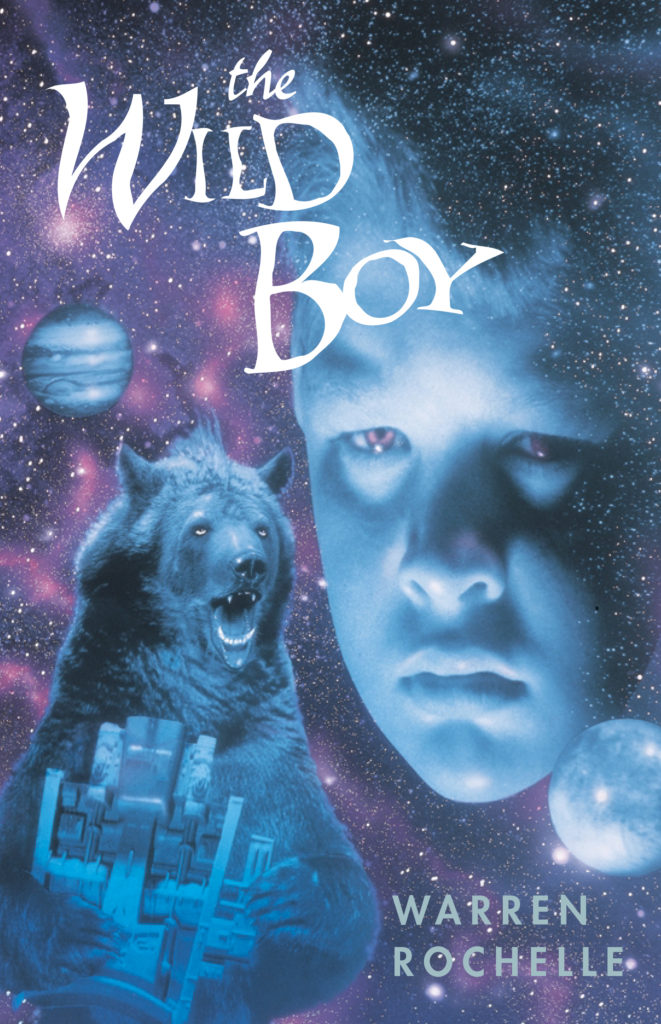
The Wild Boy, my first novel, is set mostly in the ruins of 22nd-century Greensboro, NC. Readers will find familiar names and places and the same time, find themselves in a future world that is very different from the real world.
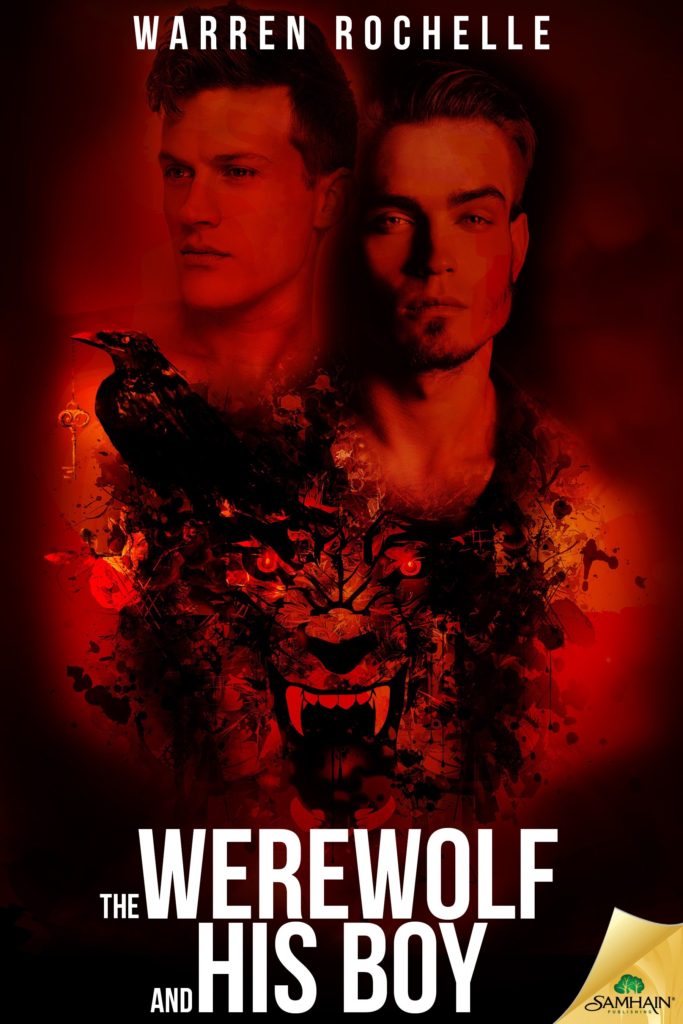
Harvest of Changelings and The Called, my second and third novels, are set primarily in the Research Triangle area of central North Carolina. The Werewolf and His Boy is set primarily in central Virginia. Like The Wild Boy, readers will find familiar names and places, and they will find these familiar names and places are also magical—they are different in a fundamental way.
The histories of each of these worlds are parallel to the real world. For example, in our world, the US Civil War is fought between the North and the South, the US and the CSA. In the world of The Golden Boy,one of my current works-in-progress, there is no US, rather there is the Columbian Empire, whose history often parallels that of the US. The Columbian Civil War is fought between the Emperor and Parliament.
AQG: What helps you write what you do?
WR: In no particular order: reading a lot of speculative fiction, particularly fantasy, reading and studying the building blocks of fantasy, including mythology, magic, and religion. I also find it helps, if I can, to go where the stories are set.
AQG: What do you look for in cover design?
WR: What do I look for in cover design? So far, my control over how the cover looks has been limited. Given that, what I look for, and what I have suggested for inclusion, is an iconic image of some kind: of the characters, who they are, how they are together—something that says these are the people I created, or a particular place that, in somehow, typifies where the novel is set. I want to look at a drawing of a particular character and say, yes that is how they could look.
AQG: Describe your writing process! Do you set goals for yourself? Where do you write? Is there a time of day that works best for you?
I have as an ongoing goal, to write every day. Sometimes I stretch that to include reviewing and rereading and revising the previous day’s work. But, alas, given how busy things get during the school year (I teach creative writing at the University of Mary Washington), sometimes this goal—more often than I like—is not met. But it is always there and I can tell when I have neglected my daily time at the keyboard or at the desk for revisions. I feel somewhat out of sorts, as I am not quite connected to the universe. Something is missing.
I write in my study,
although when I travel, I take a notebook for inspiration or sudden
ideas. I often take a work-in-progress. I keep note paper on the
night table by my bed. When I am in the middle of a project, I find myself
living, at least partially, in this other world. Thoughts, connections, aha!
moments, will arise out of the story cauldron unbidden.
Mornings are best, but I find it more productive to just write, regardless of time of day, and to be satisfied with just one paragraph.
About Warren Rochelle
Warren Rochelle has
taught English at the University of Mary Washington since 2000. Rochelle’s
short fiction and poetry have appeared in various journals, including the North
Carolina Literary Review, Forbidden Lines, Aboriginal Science Fiction,
Colonnades, Graffiti, Collective Fallout, Queer Fish 2, and Icarus, as
well as the Asheville Poetry Review, GW Magazine, Crucible, The
Charlotte Poetry Review,Second Hand Stories, and Romance
and Beyond. His short story, “The Golden Boy (published
in The Silver Gryphon) was a Finalist for the 2004 Gaylactic
Spectrum Award for Best Short Story. His most recent publication, “Luck,” came out in Fae
Wings and Hidden Things in July 2017. His short story,
“Mirrors,” a gay-themed retelling of Beauty and the Beast, is
forthcoming in the Cuil Press anthology, So You Think You Know Love.
Rochelle is the author of four novels. The first three, The Wild Boy (2001), Harvest of Changelings (2007), and The Called (2010), all published by Golden Gryphon Press. His fourth novel, The Werewolf and His Boy, was published in September 2016 by Samhain Publishing.
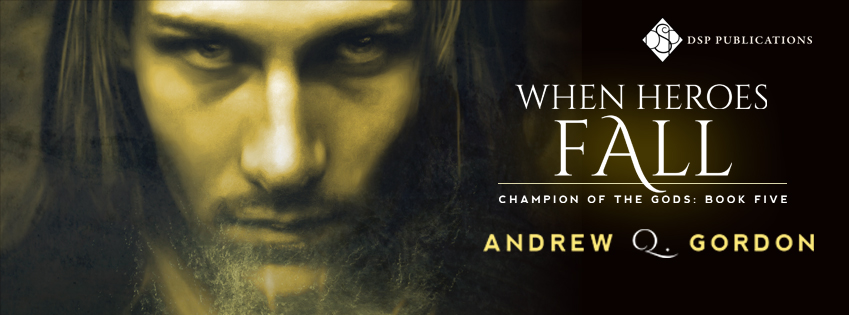
As the title says, today is release day for When Heroes Fall. (You can find buy links below) I’ve looked forward to this day with anticipation and a touch of sadness. I’m anxious to hear what readers have to say, but I’m also a bit melancholy that it’s over.
I was searching through my Champion of the Gods folder this week and came upon a file dated 10/26/08. It was a scene from Child of Night and Day. Although the files have been modified, deleted, merged and assumed, I know I began the series before 2006. I know because we moved into our current house in August 2006 and I had already begun the series.
As best I can recall, Champions began sometime in 2005. It started with a scene that doesn’t exist anywhere in the series. Chamdon were rushing toward Haven and Miceral was leading a charge of unicorns and Muchari against them. Farrell was back by the twin Sources and his mentors were beside him. He alerted Miceral to break off and as the defenders pulled back, he unleashed as spell to cut down onrushing enemy forces. I couldn’t find that scene when I looked, but I know I saved it on thumb drive. So it’s somewhere.
Now, after fourteen years, I can finally write “The End” It’s been a long, satisfying journey for me. And if you’re reading this I hope you’ve enjoyed the time spend with Farrell, Miceral, Nerti, Klissmor, Kel, and everyone else. If you have any thoughts or comments on the series, or characters, please leave them below (or email them to me) as I’d love to read them.
People have already asked about future installments, but I don’t have any plans to start a new series based on this world. Maybe in time something will come to me, but other than going backward and telling Kel’s story, I’m don’t see what’s next for Farrell, Miceral and the others. At least not today, so I won’t say never.
We’d like to welcome sci-fi and contemporary romance author A.T. Weaver to the Land of Make Believe!
I am a retired accountant, the grandmother of eleven (I always say nine came about the usual way, and two are extra), great-grandmother of one. I have no problem with telling people I’m 76 years old. I live with Kiyah, the devil cat, in downtown Kansas City, MO.
My roommate.
The view from my window when I’m writing.
When I
was growing up in the 1950s, the word gay meant happy and carefree and
homosexuals were called queer or ‘one-of-those’. However, I guess I was
sheltered from a lot of things, because I never heard those terms until I was
married and a mother.
In the
early 1960s, two men moved into the mobile home court where my husband and I
lived, and he had to tell me they were (excuse the term) ‘queer’. I didn’t know
what he meant.
In 2003,
through a TV show called Boy Meets Boy, I ‘met’ over 3,000 gay men in a Yahoo
group. These men educated me as to the inequalities suffered by the LGBT
community and I became a staunch ally. I visited one of the men in San
Francisco who lived just up the street from the Castro. As he showed me around,
we stopped in front of what was once Harvey Milk’s camera store. My question,
“Who was Harvey Milk?” started my education into Gay history.
At the
end of that visit, Steve said he’d like to read a story where the boy gets the
boy and they ride off into the sunset together. I’ve never been one to ignore a
challenge, and decided to try my hand at writing.
I knew
very little about gay sex except what I’d learned watching Queer as Folk. Every
sex scene I wrote, I’d send to Steve and Fred and ask, “Does that work?”
After a
few books in which I wrote somewhat descriptive sex scenes, I decided that my
readers could imagine better scenes than I could write and started ‘fade-to-black’
scenes.
My first
sci-fi book came after reading several shifter books by other authors. I asked
one of them what rules I needed to follow, and was told, “It’s your world; your
rules.”
People
often ask authors where they get their ideas. I worked for an accountant who,
when she was asked where she got those numbers, she’d say, “I found them on my
ceiling.” I think that’s where I get a lot of my ideas, on the ceiling.
My aim is to move my reader in some way. Whether you laugh or cry, love it or hate it, I welcome all comments, whether good or bad.