


Reviews, Are They Useful?
I apologize for not having a proper ‘Wednesday Brief’ to post, but life – better known as ‘lil q, Easter and a bit of a cold – got in the way and sapped my creativity. I’ll do my best to resume next week and there after. But since this is a group I belong to, I wanted to be able to promote those good souls who managed to keep with it. Those flashers are listed as usual, at the end of this post.
In addition to the Wednesday Briefs, I belong to a few author groups. One of the themes lately has been reviews. Good, bad, or just maybe not really a review at all. Different people have different positions on reviews, but I’ll admit that I read and react to reviews. I like good ones and I don’t like bad ones. That said, well written critical reviews do have some benefit. The trick, for me, is to look past the disappointment to find those benefits.
I’ve also noticed a pattern. On open post sites – those where authors post stories that can be read for free – the reviews tend to be almost uniformly positive. Negative ones can result in the reviewer being torched a bit. If you think about it, this would make sense. The authors are providing a free service and the readers would want that service to continue. The downside is it can lead to the ‘naked emperor’ syndrome – where the author believes all the ‘good press’ and doesn’t think there are any areas they can improve on.
On sites like Amazon or Goodreads, there is a much broader spectrum of reviews/ratings/comments, from gushingly good to attackingly awful. That is to be expected and also makes sense. You can’t please everyone. But it is in that diversity that my questions arise. How useful are reviews to a reader in choosing to buy a book? I’d like to see if I can’t generate a bit of feed back from readers (authors/readers included) on the usefulness of reviews and ratings so I’ll do a bit of an impromptu contest outlined below.
For me, as an author, I want as high a rating as I can get – it’s a confidence [dare I say ego] boost to be sure. And we all “know” that higher is better – right? Right? Maybe, maybe not.
Do textless ratings sway you? Do snarky reviews from people you don’t know scare you off? Do gushing reviews from people whose taste in books you don’t know make you want to buy the book?
I’m a ‘facts’ person. I love to look at things and see if I can’t find a connection. It’s part of being a lawyer/prosecutor I suppose, but I’ve always been this way. I’ll track things, kick the tires, look under the hood – you get the idea. So let me give some anecdotes to grease the wheels.
One book I was interested in had 8(eight) 5 star reviews a month before the book came out. Really?? One was from the author, another from the publisher, and 5 others from what would appear to be family and friends who didn’t offer so much as a word of explanation. (One had a detailed review) At least two of these ‘ratings’ were from people whose only rating was this book. Hmm. Last I checked – and it’s been a while – this book only had 14 ratings – of which 7 were what I’d call too biased to be of any use. Were those ratings of any use to anyone? Was anyone swayed by the books ‘high’ rating and never looked any closer?
Okay, so ‘naked’ ratings aren’t that helpful, but what about gushing reviews from people you don’t know? I understand that in the Amazon age, the ‘citizen reviewer’ is supposed to be more reliable as these are people ‘just like you or me.’ But fake, for purchase reviews aside, is that really true? Does Joe in Kansas really care what Sara in Rhode Island thinks when they’ve never met? I suppose here, the value is more long term. Readers can find reviewers who’ve read books the reader has, and then they look for patterns. I liked book “A” so did this reviewer, I thought book “B” sucked so did they. Then you can see what else this reviewer likes and used that to weigh buying it or not. At least that’s how I am. But in general, do you find reviews from people you don’t know useful? Or do you look at them all with a suspect eye – i.e. these are either written by the author using a different account, or they are close friends and family?
Another question is ‘rating inflation.’ One thing I’ve noticed – and I admit to being guilty of it myself – is that many authors do not give low ratings – ever. Makes sense because what the rater giveth, the receiver can giveth as well. Given how simple it is to open a ‘reader’ account, an author who received a low rating could easily rate the reviewing author equally low or lower (if possible). Never mind their friends and supporters. For me, if I can’t say something good or in all honesty give a book a decent rating, I don’t rate/review it. This leads to a very high average for the books I’ve rated. Being totally honest, I doubt there are too many 5 star books out there. a 3 or 4 should indicate the book is worth buying. But when authors can ‘collect’ seven 5 star ratings before their book has been finished, the clear pattern is for friends and family to dap the book up. Using me as an example, I’ve only rated 10 books and my average rating is 4.9. how useful is that? Have I never read a bad book? Of course I have, but if you didn’t know me and didn’t know I only rate books I like, would my rating – even with a written review- be of any value to you?
Contrast this with a 3 star rating I received from someone this week. At first blush, he probably didn’t like it much, right? But his average rating is 2.71. meaning out of the 1600 plus books he’s read and rated, mine is better than the average book. Is this 3 star rating from him better than a 5 from me? The real inches vs. web inflation debate. [some of you will get that reference. :-P] So do you focus on absolute numbers or do you take them in context?
Along the lines of numbers to look at – I read a blog post that said the rating given wasn’t as important as the fact that someone gave you a review/rating because it shows they read it. Good point. Here’s a tale of two books I read recently. Both were okay in my mind. One has a Goodreads rating of 3.79 from 600+ ratings. Of those 600+ ratings more than 125 were 5 stars. The other book has a rating of 4.27, but from less than 90 reviews. Which is better? At least 125 people liked the first book well enough to rate it a 5, which is more than all the people who thought enough to leave any rating for the second. So, again, what matters more? A high absolute rating or a lower rating but a higher absolute number of positive reviews?
Last there are reviews from ‘review sites.’ In theory, these are people who have an interest in being fair and even handed. Yet here too, opinion vary – wildly. Much like the ‘citizen reviewers’, these reviewers each have their own likes and dislikes that earn them a following. So are these sites/reviews the holy grail of ratings for you? Or do you just read them for entertainment and sometimes use them to start your ‘research?”
So, what do readers think? {And authors, take off your author hats if you can and think like a reader} Do you find reviews helpful? What about average ratings? Overall number of positive reviews? Do you look for people whose opinions you trust and rely on those? Or is there something else you find helpful in reviews?
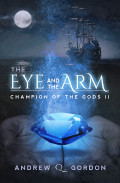
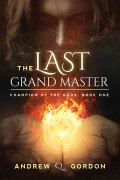
To give you all a bit more incentive to comment, I’ll give away a copy of either The Last Grand Master or (Un)Masked to one person who comments, drawn at random. To enter, you need to leave a comment telling me whether or not you find reviews, rating, comments, whatever, helpful. If you don’t read the reviews but focus on the synopsis, or whatever, that’s fine too, so long as you leave it in the comment section. Remember to leave your email address so I can contact you if you win. I’ll pick the winner on Monday April 8th at 8 pm, Washington, DC time.

I will try again Andy. There was some type of glitch when I tried to post a comment a moment ago.
The comments about rating and comments are relevant and noteworth. I rarely rely on ratings and comments unless I know the person or that person’s reputation. Cold comments have little reliability to me. I am by nature suspicious, and by training I suspect most people’s motives. Thus the gushing reviews appear to me to be superficial and likely have a motive other than attempting to honestly discuss and review the book. For the review to be persuasive, I need to know the person, have experience with that person’s comments, and compare past reviews to my own thought process before I accept the review fully. Knowing the author can also overcome my skepticism.
You seem rather circumspect today, but I can’t fault your logic or analysis. I hope you get feeling better.
Not sure I’m circumspect, but it was something that I’ve wondered. Authors – myself included – tend to get tied up in knots over certain reviews even though people tell us it doesn’t really matter. Well what do we know – meaning we can tell ourselves it does or doesn’t matter, but really it’s the readers who should be telling us. Hence the missive with questions
Andy,
I just threw my author hat into a corner.
I’m probably in the minority but I’ve never come across a review that convinced me to buy a book if I wasn’t considering it anyway. Negative reviews have also never prevented me from buying a book I desperately wanted to read.
I’m a sucker for drawn covers so books that fulfill this criteria will catch my eye first. If the blurb sounds intriguing there’s a high chance I’ll buy it. I read a lot of genres and as long as I can be pretty sure to get my HEA or at least a HFN I’ll try almost anything.
I’ve read books with glowing reviews and barely finished them while I also read books with more negative than positive reviews and loved them. But sometimes I read a well-thought out review (even if the overall rating wasn’t great) of a book and will give it a try. It all depends on how the review is written. Snarky reviews don’t do anything for me but if there’s a lot of explaining why this or that worked, then, yes, they can be helpful.
I think you and think a lot alike when it comes to this. I find myself at odds often with some reviews so I just try to find folks I trust and go with it. Thanks for playing.
I’m not a writer but I love to read. A synopsis catches my attention, if I’m hooked from that reviews may or may not define my decision. I will read reviews , take into review ratings but in all truth my final decision is mine to make. I know what I like and I read what I like. Reviews, recommendations and the like can be useful and it’s nice to read what opinions other people have but in the end the final decision its all mine. I’ve read books with those gushing reviews and wondered where there mind was when they read it and I’ve read books with less than glowing reviews and loved them. I leave review on stories I’ve read. Not because think it will persuade or the opposite for someone to read a book. But I do because I like letting the author know what I thought, granted they try to be positive but usually are quirky. So finally to answer the question yes reviews can be useful but more so after the book to compare my thoughts to others. Reviews prior to reading the book are useful only if I’m stuck sitting the fence then small clues in the review. Can intrigue to either side of said fence.
I’m a reader not a writer so reviews may or may not have the same importance. A synopsis catches my attention that will determine if I read a book. I read what I like. I read reviews not so much to determine what I read but more in comparison to what I did read. I’ve read books that have multiple glowing reviews and then wondered if they were all on cracks when they wrote the review. Other times I have read snarky or rotten reviews and wondered where there head was lol.if I’m sitting on the fence on whether I want to buy or read a book I will read reviews for clues that are there beyond what was in the synopsis to determine what side of the fence I will slide to. On the other hand I like leaving reviews giving my thoughts on a book. They are usually quirky, positive sometimes negative but usually always honest. So are reviews useful. Yes for giving your thoughts and perceptions of the book you read, but not so much for decision making on whether I want to read it or not. To me synopsis is the appetizer, the book is the meal the review is the dessert. And you know what momma always said “never eat your dessert before your meal”.
Daithi – thanks for responding. To me – as an author – what readers think is more important than what I think. I can say reviews matter a lot but it the readers say not so much, then really they’re right not me. lol.
You raised a very good point – the review as a thank you to the author and reading others to see if you and the others saw things the same way. That sort of interaction is much easier on discussion boards like GA or on individual blogs. On Goodreads there is this unspoken law that Authors shall not engage readers/reviewers on the review page. Not sure who made it up, but I’m told it’s written some where and violating it is a big no no.
But I appreciate you took the time to respond – twice. I’m sure your first review didn’t show up so you tried to do it again. That won’t happen now that I’ve approved the first one. You’re officially allowed to comment all you like now
PS, you only get one entry, however.
For me, Reviews are pretty important – but I enjoy negative reviews more than positive reviews.
For example, I worked with an editor and I thought my work was great but then she took my manuscript and ripped it to shreds. But I needed that, because I know (from that experience) that I have a hell of a lot to learn in terms of writing and craft.
I like negative ones because I find those ones have really read my story and really consumed the ideas and know what needs to be improved.
Of course I dislike full on hating reviews, like any author haha
Well Howdy JC. How’s Uni treating you?
Question, you like negative reviews even when in a public forum like say – Goodreads? Wow, you’ve got you some mighty thick skin.
I agree that critical ones that offer help are the best from a learning point of view, but it’s also nice to read that people enjoyed your hard work and it gave them some pleasure. No?
Hey! Yes, university exists and it is going. Group work is highly frustrating
Well, i’d get upset like any author but I feel that i learn more from those sorts of reviews.
But a bit of ego boosting is great from reviewers if they like a story
As a reader, I find reviews helpful if they’re from people who I know share my tastes. Also, when quite a few reviewers make the same critique (positive or negative) I find that useful as well. What doesn’t help me much is when reviewers simply give stars without writing comments.
As an author, I’m ambivalent. Of course, when I get negative reviews I’m devastated. But if I wait a while for the hurt to fade, I can sometimes glean valuable advice. Or I can simply conclude that it’s not personal–that a particular reader just didn’t have a taste for what I wrote.
Thanks Kim. One thing I find ironic, at least with me – I’m totally fine just stars when they’re 4 or 5, but not fine when they’re 1 or 2. So yeah, I’m a bit of a hypocrite I suppose, but I’m an honest one
As a reader, the only reviews that have ever dissuaded me from buying or reading a book are those with content warnings neglected by the blurb. I’m not a fan of extreme BDSM, for example, so if I read a review warning a book contains it, I’ll probably stay away. Ideally though the publisher should alert readers to content.
Like you said, it’s hard for an author to review books, and I don’t do it anymore. Partly out of fear of retaliation, partly because I’ve become friends with many authors especially within the genre, and partly because I know what a monumental effort writing a novel is, and I can’t bring myself to trash someone’s book even if I didn’t like it. For all I know, that person wrote the best book they could and I just don’t want to tear them down.
I impulse-buy loads of books based on the blurb or the cover (I also love the drawn covers) without ever reading a single review. Ebooks, especially from smaller publishers, are pretty inexpensive, so if I don’t like it and don’t finish it, I don’t feel like I’ve lost much.
Gus,
I kinda wanted to laugh at this because I bought Ash and Echoes cause I saw a review from Pixie at MM Good Books and she was like – this is great stuff. But I agree, I read the blurb, and see the cover etc. Your comment about a review that has info that’s not in the blog – I’ve seen quiet a few reviews pan a book based on something in the book they felt they should have been warned about. I don’t think that’s grounds for a bad review, but when I see that in a review, it does kinda shy me away, especially if I don’t like what I’m being warned against.
Thanks for commenting.
I think reviews should be treated as they are, simple opinions. If I went soley based off reviews, I would never have watched some movies where people only gave it two stars or I may have bought a cd later on that people rated five stars and it blew. What I have noticed in my reviews that I have received for TImber Manor, some people liked certain aspects of it for one reason and others hated it for the exact same reason. While reviews are a good indication of demographics, they’re really not useful after that except as an ego boost.
Thanks for reading and commenting. I think the some like this part that others hate is common and why I expect some negative reviews. But there is negative – i.e. 2 stars because I didn’t like it. And there is negative – this sucks and it’s the worst POS I ever read. The former you can slough off and say, gotcha, the later – yeah well. Thanks again for stopping by and for following me.
AQG
I have esoteric tastes, when it comes to books. Sometimes I’m looking for something very specific, like a cyberpunk story or a story about a rock band. So I do online searches. Then I tend to read the blurbs and look at the covers and generally buy the books based upon those. Next I start reading. If the book doesn’t grip me in the first few pages, I might put it down, and if I’ve read to the end of the first chapter and it still hasn’t gripped me, that’s pretty much it. AFTER I’ve read the book, I might then glance at reviews, but often not until then. That’s just to see if other people agree with my assessment of a book. It’s rare that reviews factor into buying or reading a book for me.
Hey Jamie, Thanks for stopping by and commenting. You’re the second person to say they check them out after to see whether others felt the same. That’s rather interesting and cool. I’d not thought of it that way, but it would be useful as a way to find others over time who like the same things by and large so if you’re on the fence you could turn to them and see if they read it and if so what they thought. The other common theme is covers and blurbs. Shows why we authors need to pay attention to them almost as much as anything else.
Thanks again
AQG
I do look at reviews before I purchase most of my books. I love emotional reads, so I keep an eye out for that, as it’s not usually something you can sense from a blurb. On Goodreads, I like to see what “shelves” people have put books on. If a book is on a “made-me-cry” list, that often catches my interest. I tend to gloss over negative reviews, especially if they’re snarky or ranty. I know my tastes often deviate from what’s “popular” so I keep that in mind when I read reviews as well.
Mostly, I like to read reviews from people I know and who have loved other books that I have loved.
Madison,
Thanks for popping in. The ‘I try to find folks with similar tastes is another common theme I’m seeing.’ That is one of the more important aspects of GRs for me. As I said in an earlier response, it’s what prompted me to buy Gus’s book Ash and Echoes. Someone I trusted liked it. But the check the shelves idea is something else I didn’t think about. Thanks for the tip.
Best of luck with the new release Play Me, I’m Yours – {yeah I did just throw in a bit of a plug even if it’s just a wee little bitty plug }
}
AQG
Author hat off. Sadly, it’s never 100% off because I’ve been a writer for forever and it’s hard to say where writing stops and I begin. However, I’ve been a reader even longer and I read hundreds of books a year. I don’t review often.
The first reason I don’t write many reviews is because of the author effect: I don’t like criticizing the work of people I know, even though I might read all their books. Second is that I truly read for pleasure and enjoy most of the books I read to the extent they merit at least 4 stars and usually 5. Third is when I do write reviews I tend to go into critique mode, meaning I address things like structure or plot instead of “Oh gosh, I completely loved X and hated it when Y did whatever.” Unlike a lot of readers, I don’t fall in love with characters very often; I fall in love with books and writing. That said, I’m careful to avoid spoilers and try to make my reviews meaningful. I’m not sure anyone, writers or readers, finds my reviews all that useful. I’m more likely to leave a review if I feel a book is under-appreciated or could use a little love.
Are reviews useful to me as a reader? Kinda. Not Goodreads reviews. I seldom read those before I’ve already read the book. Reading GR reviews is something I do for fun, to see what other people are saying about a book I enjoyed, or one I didn’t. Sometimes they make me think and they often make me smile. The ones that make me frown might prompt me to write a review of my own. But I only look at ratings out of curiosity. A very high rating means nothing to me. A very low rating, below 3, prompts me to look at the reviews because I’ll be curious what reviewers dislike about it. But ratings don’t influence my decisions on what to read. Most of the books I love best have ratings between 3.5 and 4. I am increasingly fond of review sites that don’t leave star ratings at all, but say things like “Pretty Good,” or “B-“.
I follow a handful of trusted book bloggers. I’ve become a grudging fan of one reviewer in particular because of his unflinching reviews of my work; I may not always like what he has to say about my stories, but he’s never completely off-base and never disrespectful, so I’ve come to trust his reviews of other people, too. I also browse book-selling sites using keywords, but may never look at the reviews. What I do read are the excerpts and writing samples. Those can sell me on the spot or give me a reason not to buy. Recommendations from friends are a form of review and I am most likely to follow up on those, especially if the friend has similar likes and dislikes.
Tali –
Wow – :blink: that’s a lot to consider. The notion of – “I don’t want to leave a spoiler” – is one I totally get. Its why it’s so hard for me to do a good review. But I’m working on it. Interesting idea about fall in love with books and writing as opposed to characters, I think I might be the opposite. I’ve read some books that I thought were meh, but totally loved a character. But then again, I’ve liked books quite a lot but not liked any of the characters enough to think – wow I’d like to see more of their life even while looking to see what else the author has written.
Thanks for adding your 52 cents
AQG
Everyone loves to get a good review, authors are human. I only read reviews from ethical reviewers on legit review sites, like The Romance Studio, You Gotta Read etc.
Do I read reviews if I want to read a book….no, never. I like to make up my own opinion of a story and I never expect other people to have the same likes and dislikes as me. I did pick up a very popular book once, noted it had 150 stellar reviews and I never got past the first page.
Another problem is as an author, people run in clicks . So if you don’t happen to be in the click, you could be on the NY Best Sellers list and they’ll still can your work.
Then there are the Undertaker groups…” I hate everyone”. These love to make authors doubt their ability, its how they get their pathetic kicks.
It’s like some awards, its not how good you are its how many friends are willing to vote for you.
Sad but true.
H.C.
Thanks for coming by. I’ve this a lot in my responses, but interesting indeed. Clearly I need to get out more, because there are so many different ways people think about things. I fear you might be right about the – get out the vote – notion. Though I dare say that only goes so far. My example of the book with 8 pre-release ‘ratings’ proves that those alone do not guarantee success. The book doesn’t have 20 reviews more than two months later. Clearly an ‘initial’ surge of friends and family isn’t enough to ‘buy’ success. For that I think you need to do it the old fashion way – you earn it. [for those old enough to remember the old Smith Barney Commercials ]
]
Thanks again.
AQG
Hey there,
It’s nice to chat with you here.
As a reader, I don’t pay too much attention to reviews. If it is a mixed bunch, I will follow my own instincts. What does get me to buy? A decent cover, interesting blurb, a good price (I do like a bargain, lol). Most of all, I’ll buy from a writer whose work I have loved in the past (that’s why the best thing to build up, in my humble opinion, are some loyal readers). When it comes to electronic book purchases, I miss being able to skim through the book before I buy it.
I agree with Gus’s comment too. As a writer, I know how much love and time goes into creating a novel. I don’t want to hurt anybody. I do not review books—good or bad. I feel like it is a slippery slope. I don’t ask others to review mine, not even my family. I might be a bit stupid there. I know most writers are having these “5 star reviews” from family or close friends, but I do not feel right about asking them to do it. If somebody goes ahead independently and writes a nice review, it does make me very happy.
As for reacting to my own reviews, I tend to shy away. I do, of course, like encouraging reviews. I truly appreciate it too. For me, though, the best thing to do is just keep on writing. The negative reviews only hurt my feelings. I do, however, love and appreciate a tough edit. The time that I want constructive criticism is before the novel comes out. After it is released, I prefer to try and move on.
Hey Skylar – stop by and chat anytime
You and Gus make a good point, reviewing an author is hard. As you both point out, most everyone who puts out a book doesn’t feel proud of their work. So writing something negative – especially in a public forum – isn’t the something any of us would want so why would they. Where I disagree with you is that I think it is nice for us to say – “hey I really liked this” and to let the others who peruses the reviews know we said. but that’s just me. If I really enjoy something I say so.
Thanks for dropping by and for adding to the discussion.
I usually read reviews before I buy a book, unless it’s by an author I already know I love. I read both the good and the bad reviews (usually a random sampling of each); sometimes the good reviews scare me off and the bad reveiws make me want to read the book anyway. Some reviewers hate the very things I love the most in a story. (One of my dearest friends once lent me a book; it was just after I’d lent her three of my all time favorite books in the whole world. She read and enjoyed and repaid the kindness. I couldn’t chew through the book she lent me to save my life. It was *awful*. I coudln’t imagine why, after reading the books I loved so much, she would think I would like *that*. The explanation “But it’s just like __X__, only without all that stupid angst!” now guess what part about __X__ I loved the most! *G* Lesson learned.)
Helen,
Thanks for stopping by and commenting. To me it’s so interesting [yes i’m a geek] what people take from things. I’ve had exactly the same experience you have – someone loves books A and I hated it or vise versa. So, as you say, you never can tell.
Thanks again
Andy
I do read a fair amount of review sites, but not just as an author for the genre I write but as a reader. The day job is in a library so I like to keep my finger on the pulse as to what’s out there and whether to recommend it to customers looking for such and such. I also tend to review pretty much everything I read on GR mainly just to keep track of what I am reading and whether the author/series is worth revisiting as I read a lot, again across a wide range of genres and formats eg novels, ebooks, graphic novels, audio books.
The first thing that makes me dismiss a review really quickly is bad grammar and reviews along the lines of ‘wow, that was kewl’, or reviews that simply recurgitate the plot. I suspect some of that is the teacher/English Lit degree side of me. I also like to read a mix of reviews, both favourable and not so much. If a book has only a few low ratings, I tend to take more notice of the higher ratings – but in saying that, I prefer a few brief comments over a rating with no review. I’ll also take a look and see what else the reviewer is reading and see how it meshes with my own opinions – that one goes a long way. Then, if the book still looks interesting I’ll read it anyway as ultimately a review is just a reflection of someone else’s personal tastes and I’ve enjoyed a lot of books that haven’t had great reviews and hated a few that have.
Anne,
So for you, if someone wrote a good review but all they said was – this was great in 12 different ways, that wouldn’t be much more useful than giving it 5 stars? I’d agree with that. For it to be useful tell me why it’s great. And while I can see why poorly worded reviews are a total turn off, I tend to be more lenient there. As a dyslexic person, I tend to shred the English Language at times. I’ll swear I wrote something in the right tense or I’ll see the words I expect when I ‘proof’ read so I tend to be a tad more lenient, especially when a reviewer is trying to explain why they like something. But, much like a poorly proofed book, it is hard to take criticism seriously when the critic isn’t able to practice what they preach so to speak.
Thanks for the great comments.
Thank you for sharing your thoughts with us!
And to answer your question…no, I’m not swayed much by the ‘textless’ ratings.
Because it’s weird. Some of my best reviews were rated *3* or so, and upon looking at them I thought, ‘oh, well, they weren’t too impressed.’ But when I read the reviews that accompanied them, they were actually very informative and the reader commented they really liked it.
I suppose *5* is pretty much clear…LOL. But when they’re *3* or below, I only pay attention if it’s elaborated. And I certainly am not influenced by those empty little *1*s. Grr.
Again, thank you for sharing.
Hey thanks for stopping by. I can relate to your comments, I’ve gotten some 3 * ratings that were very helpful in terms of what they didn’t like and why. Even a crappy 2 star one was useful in that I could – after getting past the disappointment of the rating – see what the person was trying to say. Some of it was valid and I am trying to keep it in mind as I write. some of it I didn’t agree with as it’s that – He likes it, but she hates it kinda syndrome. But it seems to me you have an open mind when you read yours of you work and that’s always been helpful to me – when I can manage it LOL.
Thanks again for stopping by.
AQG
Honestly, I have never bought a book based on a review. I learn all I need to know about whether or not I’ll read a book – for starters – based on the synopsis and the sample chapter. As for ratings, well, they’ve pretty much become meaningless. Again, I don’t base my purchasing decisions on them.
Phoenix.
I can’t say I’ve bought a book solely on a review, but I have bought books after reading a good review from someone I trusted and then decided it was worth a look see.
I tend to agree that ratings are becoming meaningless. If I can get 8 5 * reviews before the book is out – clearly the ability to fudge is high. My office once had a policy where reviews accounted for almost 20% of the person’s salary. Naturally there was a tendency to rate everyone high enough to get the higher salary. Then a new boss came in and upped everyone’s salary to a higher level and tossed out the old reviews because he said they were meaningless, there was no way we had an office of almost all outstanding employees – he said it nicely. So he instituted a more balanced approach that actually proved useful to the employee because it focused on things to work on and things you did well. That is kinda how i see the current state of the book reviews. Everyone over rates [me included] so they can help out their friends and fellow authors. Not sure how meaningful it is in the end.
Thanks for taking the time to swing by and chat.
AQG
The winner of the give away was Anne Barwell. Thanks to everyone for commenting and helping to make this a rather lively discussion.
AQG